Licida Vidal
A spoonful of salt and a spoonful of sugar

Residency 2. Shifting Shores – Instabilidades Costeiras
Host Institutions:
TBA21, Spain
IO-USP LACO, Brazil
Pivô Arte e Pesquisa, Brazil
During the Shifting Shores residency (in Ubatuba and Salvador), Licida Vidal contrasts the natural beauty with the scars of mass tourism, exposing the severe contamination of local waters by pharmaceuticals and sewage, confirmed by recent research from the USP Oceanographic Institute. In response to this urgency, the artist proposes and deploys a filtering assembly at the water’s surface. Expanding bioremediation to the intelligence of the social body, the gathering “Conversation with the Waters” brought together women, activists, and Indigenous and Quilombola leaders connected to the cause. From this encounter, an advisory council was formed, which guided the consolidation of the artwork and its installation site.
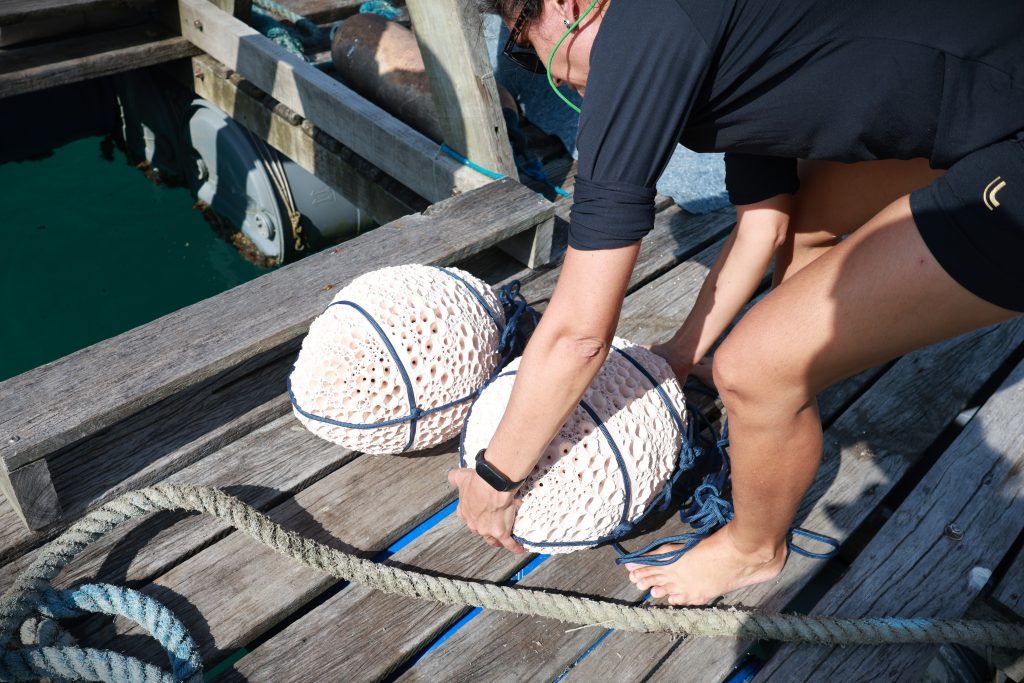
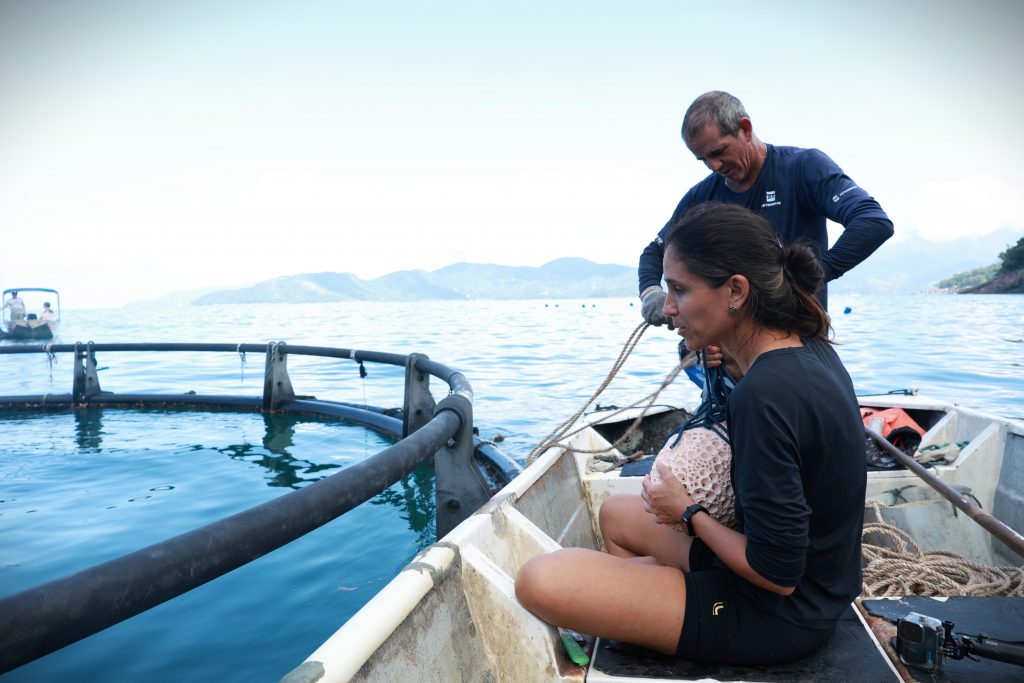
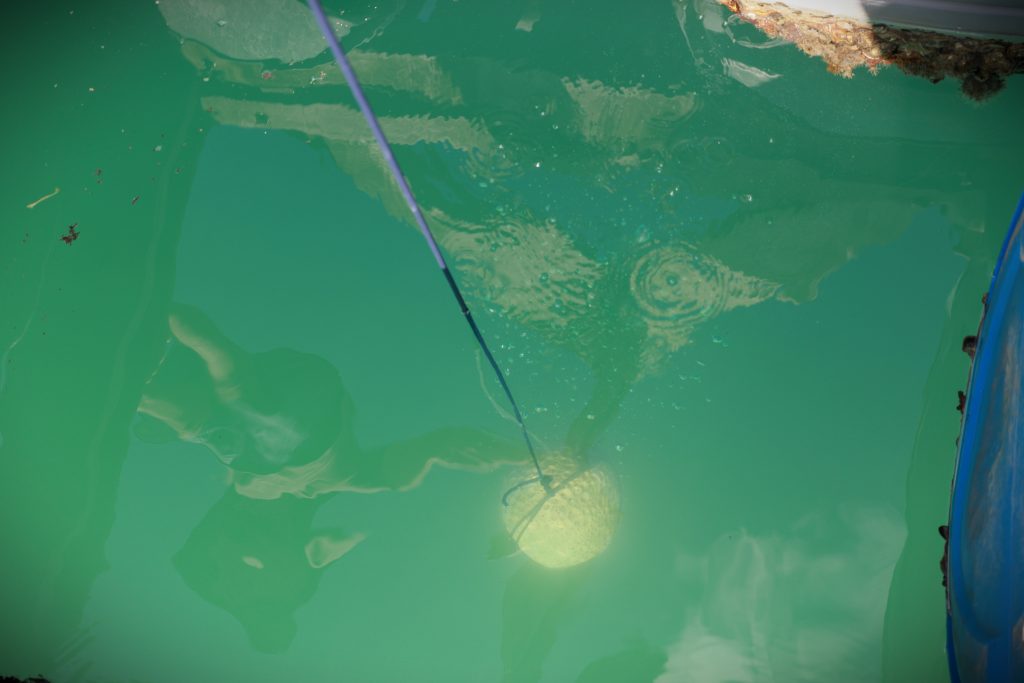
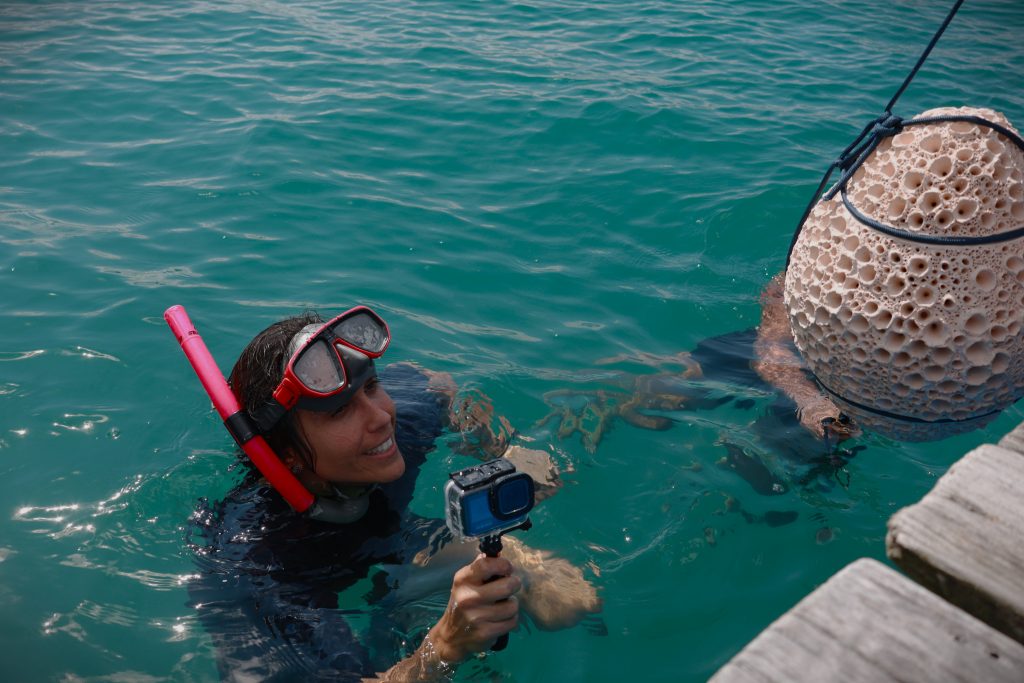
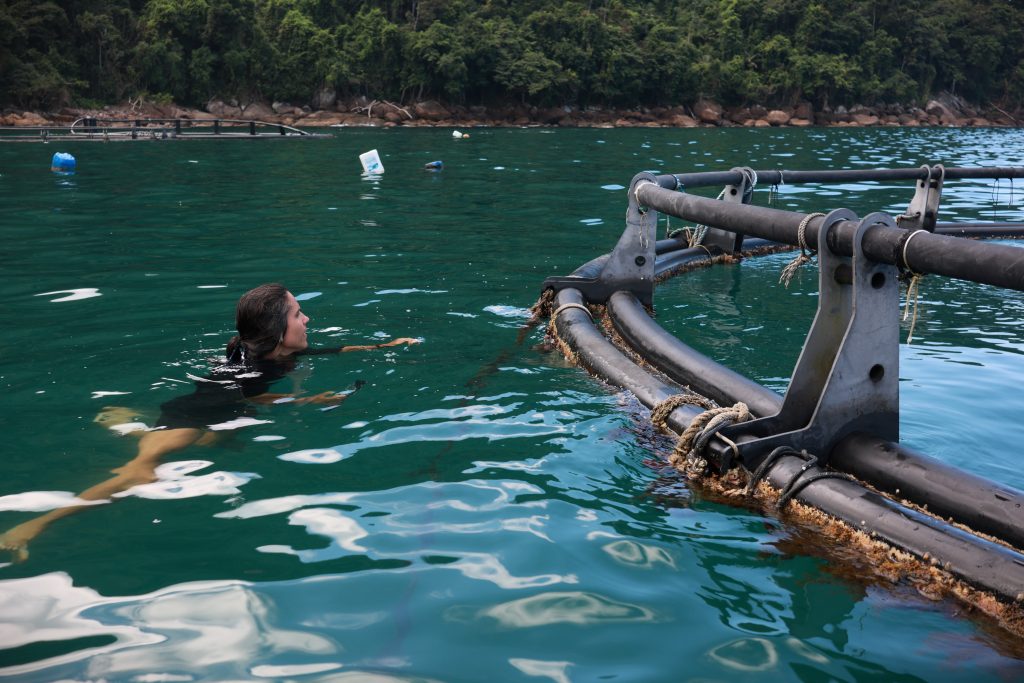
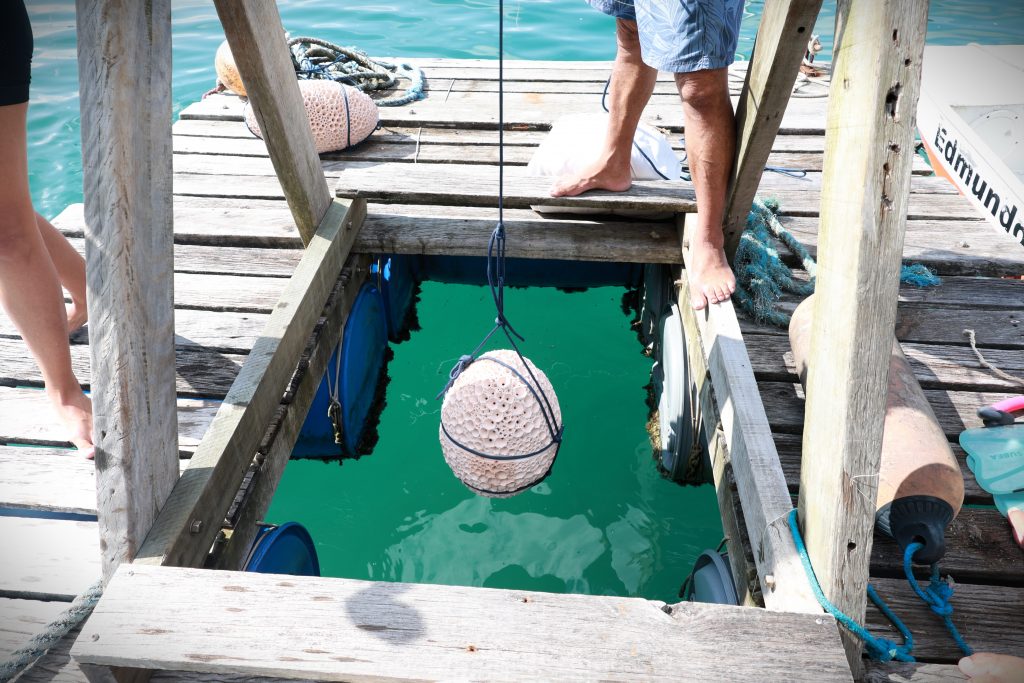
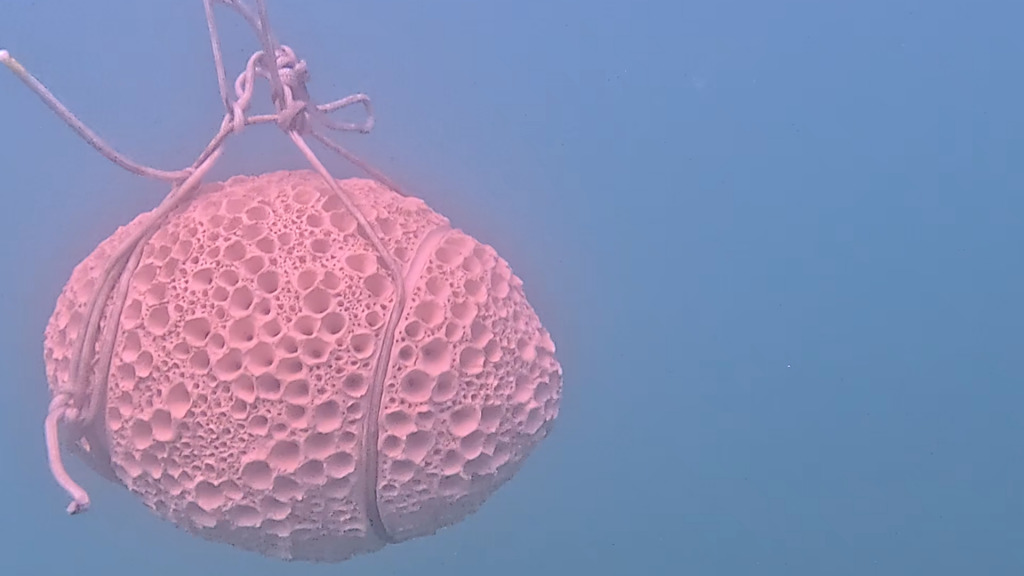
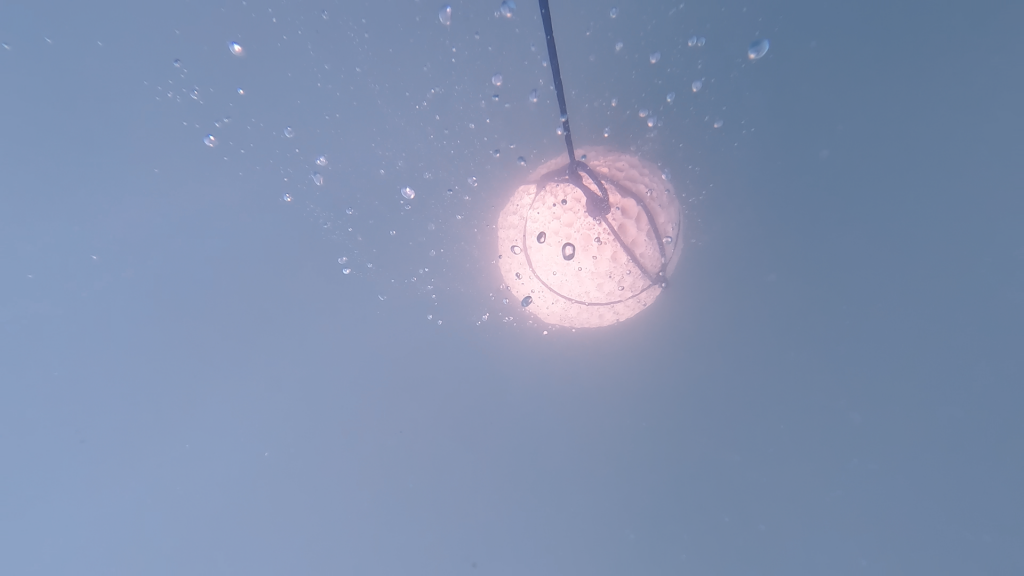
The work materializes through the dispersion of low-fired ceramic “seeds,” made porous with sawdust and designed to maintain an inward flow through the Venturi effect. Alongside studies such as Biorock technology (calcium carbonate sanctuaries) and algal phytoremediation, these ceramics, submerged and secured by cables to floating structures, act as marine shelters and traps for contaminants. While awaiting legal approval for a dedicated floating device, the sculptures were divided between a deactivated barge in a private marina and a mariculture farm, creating a mixed structure for cultivation and pollutant capture.
Titled “A spoonful of salt and a spoonful of sugar: solutions for a feverish ocean,” the work acts like a homemade rehydration solution: a gesture of affection fighting the effects of a sick system. Beyond pursuing physical and chemical efficacy in ocean cleaning, there is the symbolic efficacy of providing a space to re-elaborate care as a political gesture. This culminates in the central question: “Who, historically, cleans?” Drawing on Françoise Vergès, Licida points out that care work in Brazil has a color, a gender, and a zip code. Rejecting the idea that environmental cleaning should be an unpaid “vocation” sustained by racial capitalism, the project demands climate justice and proposes that the act of caring be remunerated, recognized, and transformed into a poetics of coexistence.
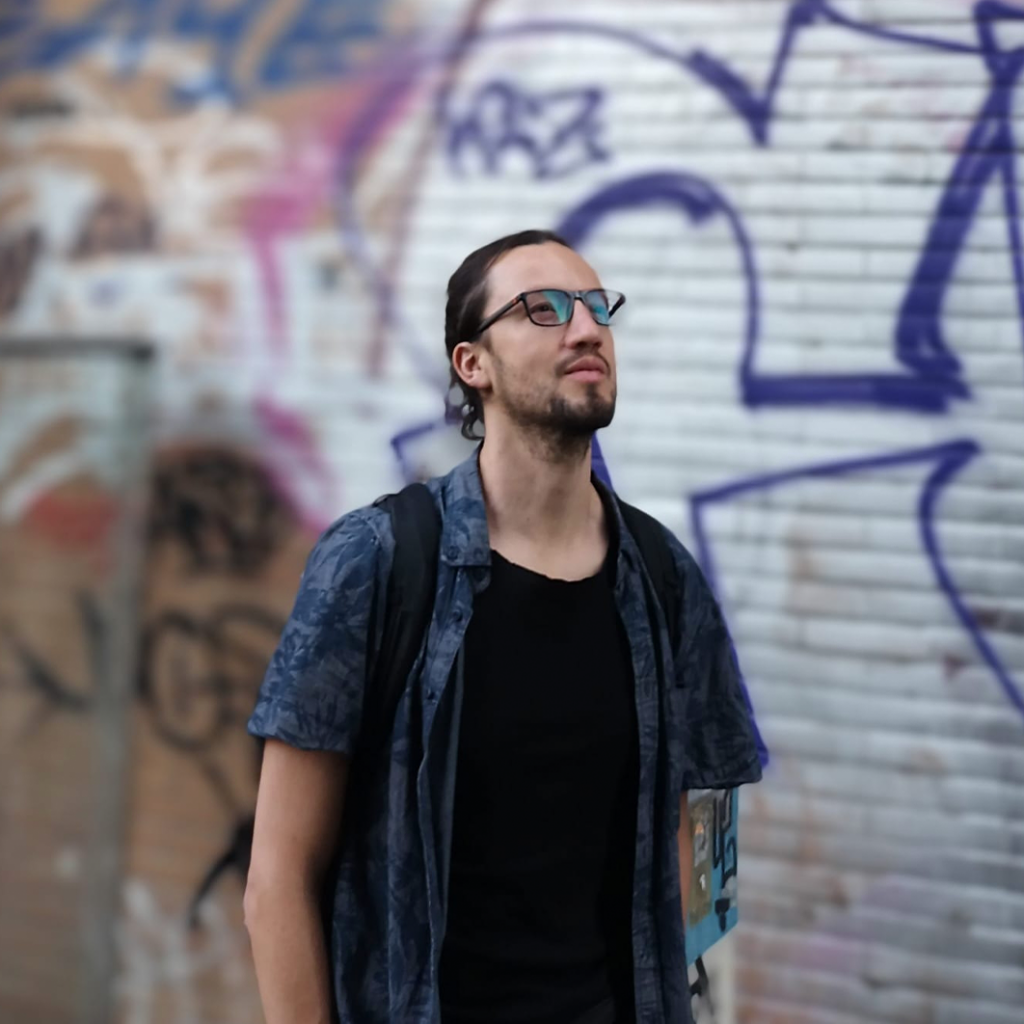
Licida Vidal is a visual artist living and working in Ubatuba, São Paulo, Brazil, graduated in Social Sciences at the University of São Paulo (USP). Through performance, photography, video, and installations, her work explores questions of gender and nature within the context of climate emergencies. Her practice weaves together subaltern knowledge, intimate experiences, and academic research in a search for strategies of habitability and the restoration of autonomy to bodies and territories.
Artist: Licida Vidal
Collaborators:
Alexander Turra — Professor IO-USP and UNESCO Chair for Ocean Sustainability
Afonso Reis Furin — Hydrologist
Ayrton Carrieri Pasquini — IO-USP Administrator
Elisa Cuesta Fernández — Project Manager at TBA21–Academy
Erica Sanches — Assistant Artist
Estela Santana — Project Manager at Pivô Salvador
Fabiane M. Borges — Project Manager and Curator IO-USP LACO
Fábio Corinthiano — Mariculturist
Gabriela Matos — S+T+ARTS Buen-TEK Translocal Expert
Isaac Prado dos Santos — Diver
José Marcelo da Silva — AUMAR Manager
José Luis dos Santos — IO-USP Technician
Lincoln dos Santos — IO-USP Technician
Luciana Frazão — Biologist at IO-USP
Maria Sol Aranda — Photography, Video and Editing
Sérgio Bindel — Managing Partner at Marina Kauai
Valéria Gelli — Researcher at the Ubatuba Fisheries Institute
Venâncio Guedes de Azevedo — Director of the Fisheries Institute
With the support of: Invisible Dust (UK); Instituto de Pesca de Ubatuba (IP-APTA) (Brazil); Saco da Ribeira Users’ Marina (AUMAR) (Brazil) ; São Paulo State Mariculturists Association (AMESP) (Brazil); Chico Mendes Institute for Biodiversity Conservation (ICMBio) (Brazil); Marina Kauai (Brazil).
The project was developed during a residency at TBA21–Academy (Spain), in partnership with Pivô Arte e Pesquisa (Brazil) and the Laboratory of Oceanic Art and Science of the Oceanographic Institute of the University of São Paulo (IO-USP LACO) (Brazil) and funded by the European Union as part of the S+T+ARTS initiative (LC- 03568052).