
HUNGRY ECOCITIES : Paths to progress Experiments
+ PROJECT
STRAW RETURN
Isaac Montè & Staramaki
SUMMARY
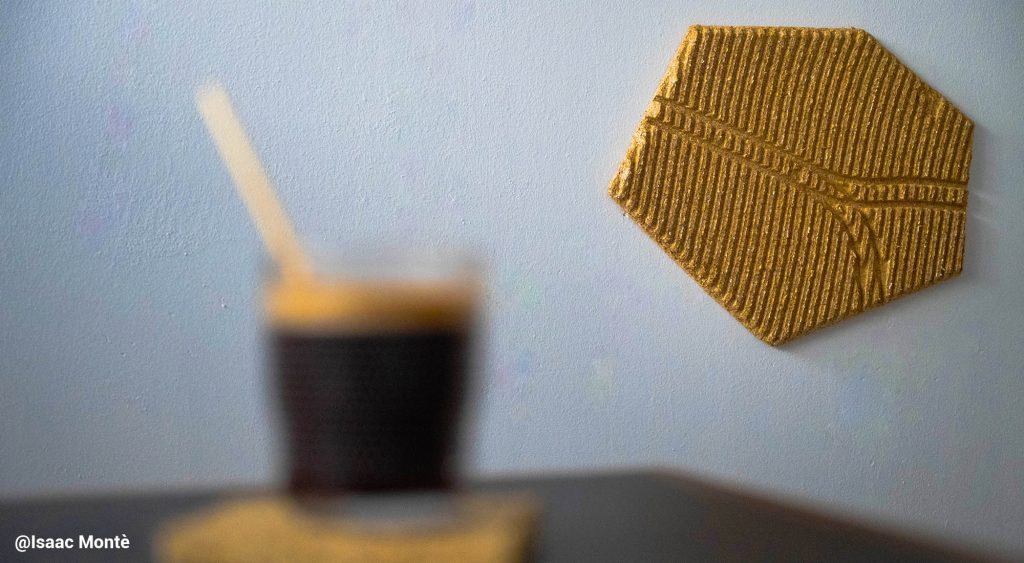
Straw Return is a co-creation project between Staramaki S.A. and designer Isaac Monté, exploring how wheat stem residues — byproducts from biodegradable straw production — can be transformed into fully natural, high-performance materials.
Through over 100 material experiments, the team developed a biodegradable composite that absorbs sound, resists fire, supports structural loads, and fully returns to the soil. By integrating waste heat and water from Staramaki’s production, the process aligns with circular principles.
The material has applications in interiors, lighting, and acoustic design, offering a sustainable alternative to plastic- and resin-based products.
Blending artistic innovation with manufacturing expertise, the project shows how overlooked agricultural waste can store carbon, support biodiversity, and tell powerful stories.
Next steps include scaling up production and partnering across design, architecture, and sustainable manufacturing to bring these regenerative materials to market — enhancing wellbeing and resilience in built environments.
DEVELOPED PROTOTYPES:
A process to turn wheat stem residues into high-value materials for design and interiors
UPDATES
+ ARTIST
Isaac Montè

Netherlands
Fascinated by societal sustainability I am interested in unusual, new materials and how I can manipulate those. I see myself as a pioneer who, by means of combining technology, art and science, shows how art can contribute to a strategy of sustainable development.
“Being part of the production team and process helped me to gain insight in the material, its qualities and its potential. During this time, I identified several overlooked waste streams, such as boiling water and residual heat, which we successfully integrated into the production process of our new line of products”
Isaac Monté, Artist
+ SME
STARAMAKI
Biodegradable drinking straws
Kilkis, GREECE
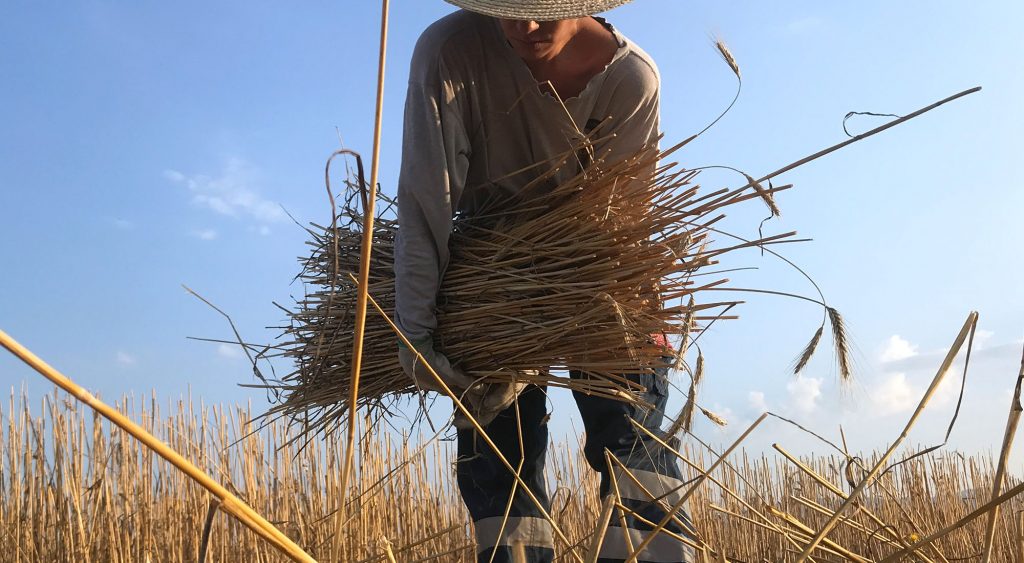
Staramaki SA, a social company based in Kilkis, Greece, utilizes local wheat byproducts to create biodegradable drinking straws, offering a sustainable alternative to single-use plastic straws.
In response to the EU’s plastic straw ban, staramaki showcases how the circular economy can address environmental, social, and economic challenges. By transforming agricultural waste into valuable products, staramaki closes resource loops and creates a sustainable circular ecosystem.
Now in its fifth year, the cooperative has provided decent work for over 20 individuals, demonstrating a low income inequality.
Through strategic partnerships, collaboration with local farmers and participation in European programs, Staramaki promotes sustainable production and cultivation, combats land degradation in rural Greece and enhances its production capabilities, exemplifing the transition to a circular economy for a more sustainable future of the manufacturing sector as a whole.
“Through the Hungry EcoCities residency, we made our operations more circular, advanced our mission toward resilience, and reached new audiences. By transforming overlooked waste streams into functional, biodegradable materials we built innovative prototypes as well as meaningful partnerships that will shape our next steps.”
Eleni Karagiannidou, COO, VP – Staramaki SA

The HungryEcoCities project has received funding from the European Union’s Horizon Europe research and innovation programme under grant agreement 101069990.