Read:
The digital Economies for African Art,
a S+T+ARTS Afropean Intelligence Insight
with NewComma & Art Meets.
In the context of the S+T+ARTS Afropean Intelligence project, many challenges have been addressed. One of them remains open: digital economies for African art — innovation, equity, and value creation. What kinds of economic models can actually support African (digital) artists beyond aesthetics and hype cycles? Probably models that protect the value of their work, build on existing community-based practices, and respond to unequal access and global gatekeeping.
To dive deeper into the subject, I met two very talented women for a joint interview: Natalie Narh, co-founder of NewComma, a talent marketplace connecting African creatives to businesses globally, and Michaela Limberis, co-founder of Art Meets an app connected to a wider project designed for the African arts ecosystem.
Author:
Nora Pessarossi for
CHRONIQUES (FR)
As part of the Sylloge Conversations of S+T+ARTS Afropean Intelligence, weaving together podcasts, expert talks, and editorial reflections to amplify inspiring voices from across the African continent.
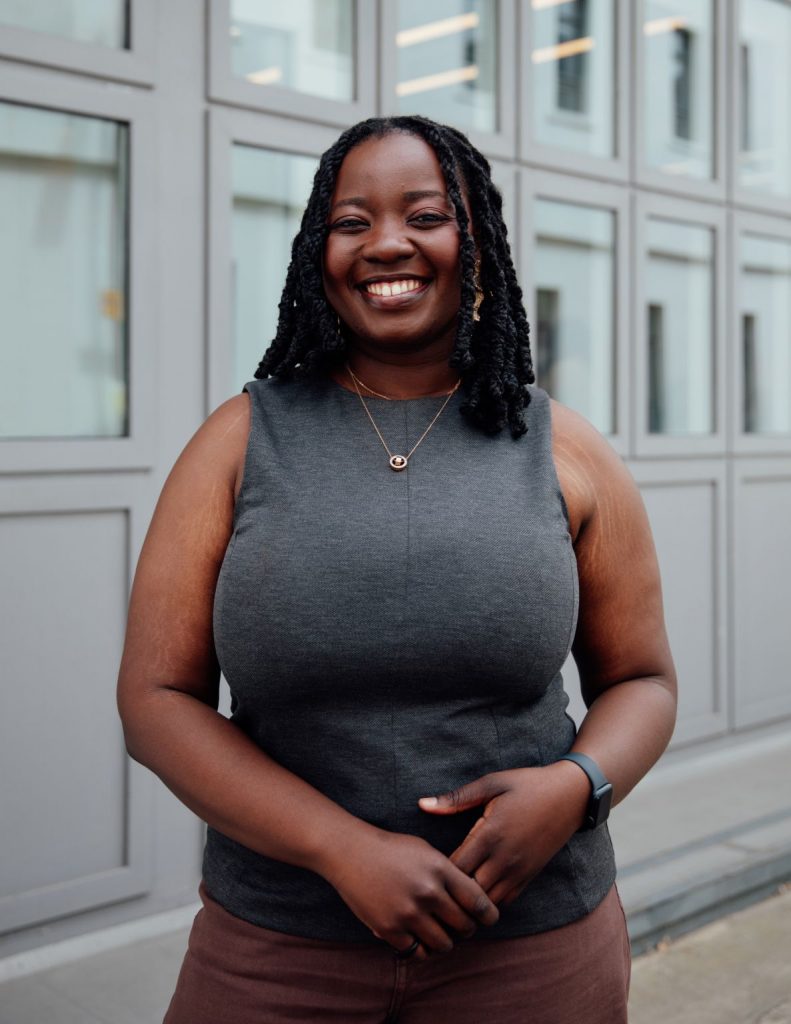
Natalie, what was the context behind NewComma’s creation and what is its current positioning?
Natalie: NewComma was built because as the world’s largest youth population, Africa will face an annual need for 18 million jobs by the end of the decade, underscoring the importance of a sustainable pipeline to meet this demand. The creative sector is where we’re focusing for two reasons: it has the lowest barriers to entry for buyers, and it’s currently one of the most in-demand sectors globally. Africa already has the talent. We’re building the infrastructure to connect it to the global market.
We’re addressing three things: discoverability, project management, and payments.
On discoverability, global creative marketplaces exist, but none are built around the needs of African creatives. We optimise for where they’re based, what they’re best at, and the narratives they’re most equipped to tell.
For project management in particular, there is a significant appetite from global businesses to work with talent on the continent. But without familiarity, they need reliable tools to ensure the work meets the brief. We embed that layer of trust into the user journey of both the creative and the client.
Finally, payment methods are the most urgent problem that needs to be addressed. For now, global platforms run on payment rails built for the Global West, while on the African continent mobile money and crypto are increasingly used for transactions. NewComma aims to make sure African talent actually gets paid, seamlessly and every time.
Michaela, what about the context of Art Meets’ creation? What needs did it address?
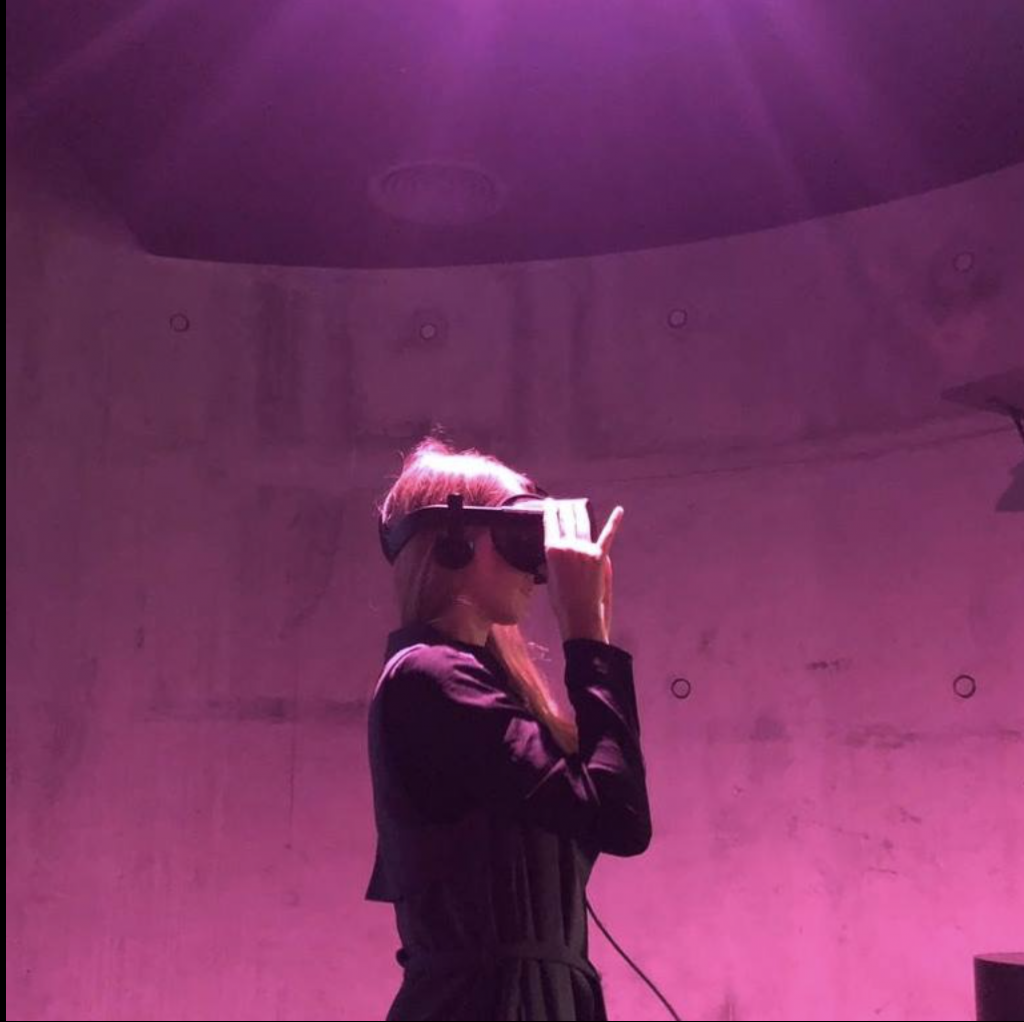
Michaela: It’s important to note that Art Meets did not start as an app. It started in 2013 as a sort of mobile gathering space, a way to fill the gap between artists’ graduation from university and the industry. This is probably very different in Europe, but in the South African context, there are few platforms to support them. Resources fall away, and so does the kind of community you had built.
Art Meets emerged as a way to continue conversations and create forms of solidarity that enabled artists to continue practising and experimenting outside of mainstream market structures. It started through site-specific exhibitions to connect the public to what was happening in the arts. We all brought something to the table to make things happen. Art Meets evolved to produce digital content, recording interviews with artists who were graduating. We created content that was lacking, and wanted to demystify artistic practice as an elite undertaking. Now, there is a proliferation of content and everybody can create their own easily online, but it wasn’t really like that at the time. And so as the landscape has changed, Art Meets’ model has also evolved to meet different needs.
One of the core needs the Art Meets app looks to address is the lack of art infrastructure: as an example, less than 1% of the world’s registered museums are in Africa – a continent with 1.4 billion people, with a median age of around 19 years. So you have a young population with increased access to smartphones, coupled with creative industries that are really coming to the fore on a global stage. We wanted to create a digital infrastructure that could compensate for the lack of physical space, and challenge current systems of economic and geographic exclusion where everything revolves around a specific hub or an urban centre, and visibility is dictated by a closed market framework. We want to uncover the horizontal landscape through digital infrastructure, to show what the ecosystem really looks like.
What about your current goal and positioning?
Michaela: Today, we are aiming to go to the heart of that question. We are not simply a content-producing organisation. Art Meets is positioned as an ecosystem builder. The app is different because we are really trying to create a consolidated platform where we can bring these existing and fragmented elements together. It’s not like we are creating everything. During our platform design we brought together people from across the continent and diaspora in curated research sessions: artists, writers, museum directors, curators…. We asked them, “In your local context and your profession, what key needs could a digital platform support?”.
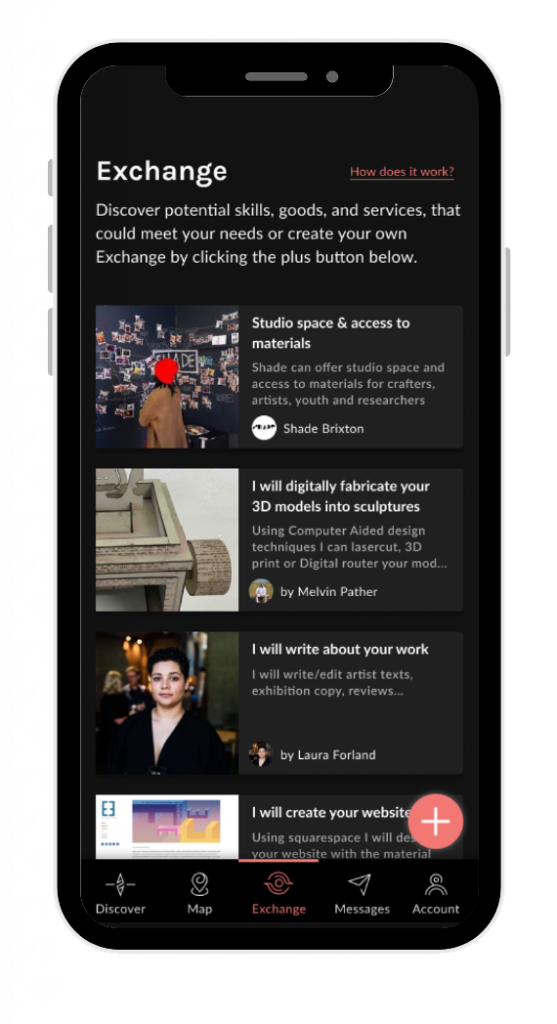
Screenshot of ‘Exchange’ page
© Art Meets, 2026
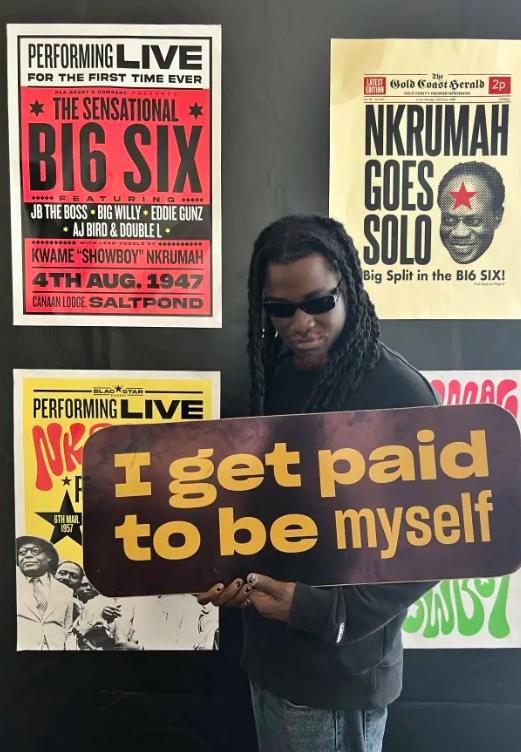
Joewackle, Filmmaker & NewComma Creative Member © NewComma, 2023
Natalie, in 2025, around 400 people found opportunities through NewComma. How have things evolved?
Natalie: We’re at an inflection point. Our talent pool is diversifying faster than the opportunities on the platform. If you’re a graphic designer in Uganda but the only listings are for photographers in Nigeria, the platform isn’t working for you. That’s the ceiling of the current model.
Right now, businesses pay to list full-time roles, freelance gigs, grants, and residencies, and that’s how over 400 creatives in our community have accessed opportunities so far. Our survey showed that freelance and short-term contracts are what the community wants most at 71%, with grants close behind at 69%. Full-time roles, despite being what most platforms lead with, came third at 49%. That gap is significant.
So we’re shifting to a commission model. Creatives get tools to find their own clients. Clients get project management built in and can pay directly. It stops mattering where the creative is based, as long as the payment rails can support the transaction — and solving that is a core part of what we’re building. It also solves a visibility problem we have now: if someone hires a creative from NewComma and we don’t follow up, we have no record of that transaction. The new model closes that loop.
What has your platform learned about how African creatives actually innovate – not what they produce, but how they move between disciplines, technologies, and communities?
Natalie: Two things stand out: how informal the industry is on the continent, and how multifaceted most creatives are. Those two things are connected.
Because the creative industry can be so informal, it actually empowers creatives to explore. There’s less gatekeeping around what you’re allowed to call yourself or do. I’m the perfect example. I started with photography in 2007, then added graphic design, video editing, DJing, web design, UI/UX, copywriting, and now creative direction and strategy. That wasn’t a plan. It was curiosity, experimentation, and partnerships that opened new doors over time.
That’s a story a lot of African creatives share, and it’s actually where our name comes from: NewComma. We are the newcomers in the global creative industry, and because of that, there’s still enormous space to experiment and define what creativity means for us, what we want to build, and what we actually want to monetise. I don’t believe every facet of your creativity needs to become a product.
What’s also worth noting is that this isn’t unique to Africa, but it’s more pronounced here because we’re still in the process of defining what’s coming out of each region. What’s happening in film in Nigeria is a completely different story from what’s happening in animation in Kenya. The continent isn’t one creative culture. It’s many, and they’re all still being written.
“The continent isn’t one creative culture.
It’s many, and they’re all still being written.”
Michaela, as for Art Meets, can you give us the most common reason for a creative to sign up for your platform, and what are the main daily and concrete outcomes for them today?
Michaela: So far, the most common reason is artists who don’t have websites, have lost trust in traditional social media platforms, or simply want to expand their networks and access audiences directly. They share their projects and events and become discoverable to art lovers and other professionals who can contact them and start a conversation.
Since the official rollout of the app in 2025, our current focus has been identifying key partnerships to populate and enrich the platform for greater impact.
For example, we have recently launched the Art Map feature in partnership with a project called the Artworld Passport, which is centred on mobility and questions of mobility in the arts. This curated map is a way to spotlight different spaces that are connected to a specific idea. For instance, Artworld Passport collaborated with Africa Basel to curate a map highlighting spaces across Basel that are linked to Africa and African histories. This is really interesting because you get this layer of a narrative that is not mainstream or at the forefront of the imagination. You walk through the city with a lens that is now totally reframed. And you are looking at all these histories and how they connect to Africa historically, but also in relation to the context of a commercial art fair.
This feature has a lot of potential to offer artists and cultural professionals. Whether it’s a curator recommending lesser-known spaces, or designing a map around an existing project theme, we want to offer the opportunity to monetise that. So the aim is also to affirm knowledge as a resource, which is often exploited. It’s a way of acknowledging value and sharing insights.
Thinking about daily outcomes, we are very consciously not trying to be a platform that makes people want to stay on it and, doomscroll, and spend all their time. We do not want to support these Big Tech kinds of addictive, unhealthy behaviours encouraged by online platforms. We’re trying to facilitate real-life connections and build meaningful outcomes. So even if it is a slower way to do this, it’s not just about the number of people on the platform, it’s about the quality of an experience and of what comes out of it.
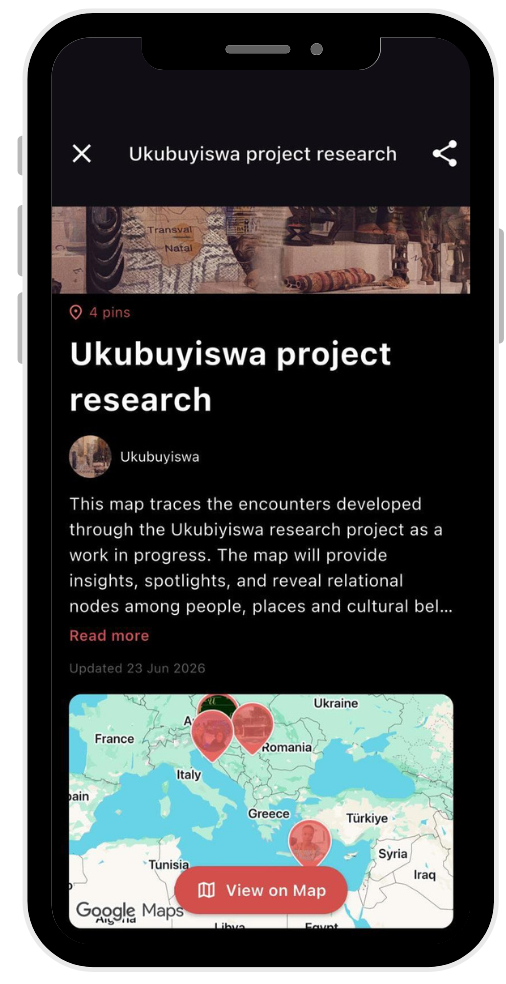
Screenshot of an ‘Art Map’ page © Art Meets, 2026
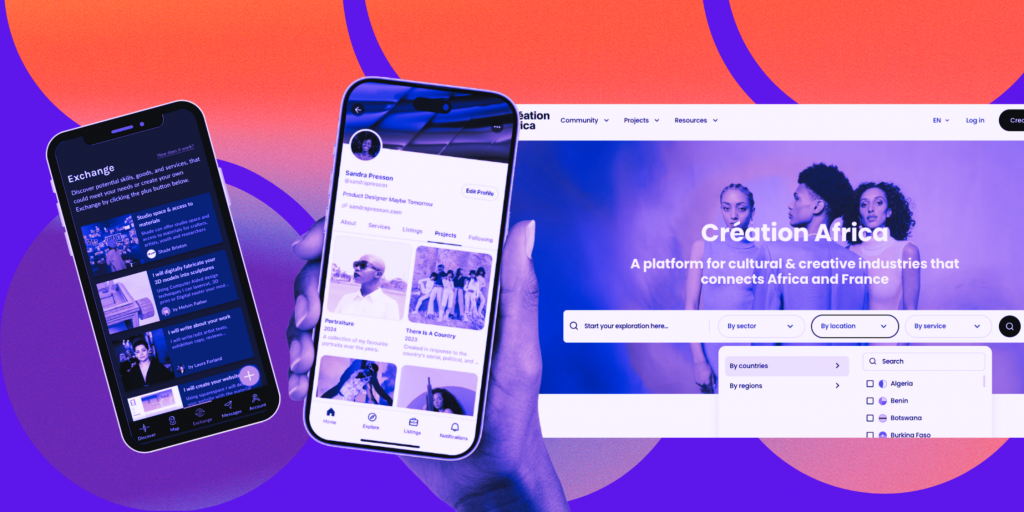
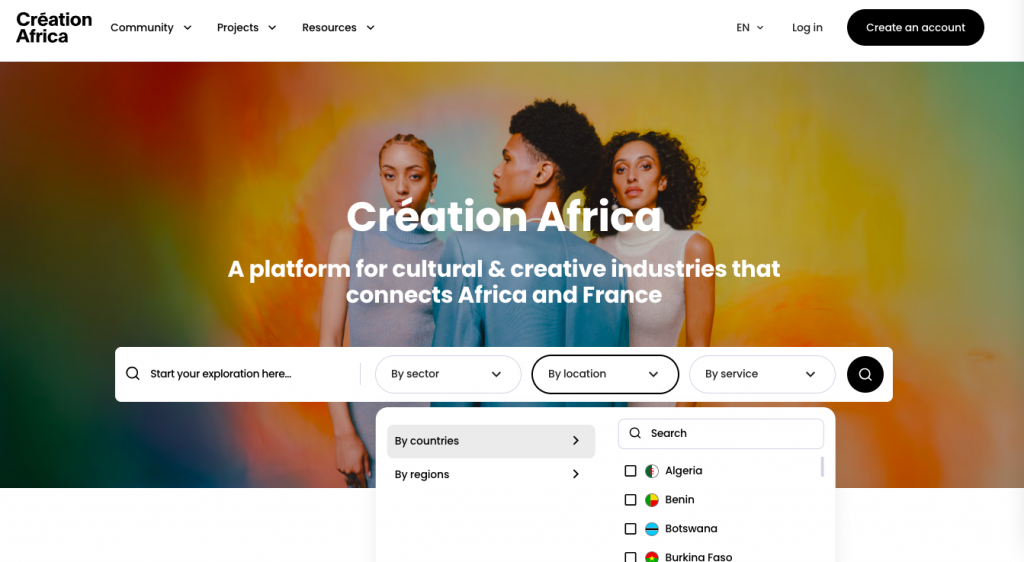
On a similar approach, I have also interviewed Lydia Prouteau, Project Officer for MansA (Paris, France). MansA – Maison des Mondes Africains is a French public structure dedicated to promoting and supporting the contemporary African and Afro-diasporic cultures. It aims to bring together entrepreneurs and creatives from Africa and France through the creation of its forum, Création Africa, and its MansA Lab programme, dedicated to the incubation of cultural projects. In this context they host the platform Création Africa, a free digital space which connects, informs and highlights CCI projects from cultural organisations and professionals in Africa and France.
The platform has been created and developed by the Institut Français and financed by the French Ministry of Europe and Foreign Affairs. It was born from two assessments. On the one hand, multiple opportunities exist for mobility and to support CCIs in Africa through French operators.
On the other hand, many African professionals contribute to these possibilities but face a constant lack of visibility on a larger international scale. For this reason many actors were consulted to help conceive and design the platform in order to address the right needs.
Hence, the platform wants to centralise offers and highlight the whole ecosystem. It relays intra-African and private French opportunities. Professional artists and their support networks — managers, technicians, etc. — project leaders, representatives of nonprofit organisations, organisation directors, and entrepreneurs are invited to join the Création Africa community.
Michaela, do you think Art Meets could also be a tool for urban and cultural policy management?
Michaela: It has this potential, with the right investment and strong partnerships. We have thought about this specifically in terms of supporting ground-up research. Mapping artistic practice across Africa and the diaspora is still genuinely lacking, even though the sector continues to thrive through informal networks. If artists and other cultural stakeholders don’t appear in reliable datasets, they’re often invisible in policy. While research on the creative cultural industries (CCIs) in Africa is consistently emerging, it’s still fragmented and often confined to a few region-specific pockets with limited contributions and avenues for data collection. Reports on the CCI’s also group together an extremely wide scope of practice which can include film, music, design, fashion, and so on. Sure, there are sectoral overlaps, but the fundamental differences are significant.
If Art Meets can consolidate existing research alongside community-generated data, that strengthens the case for funding, protection, and infrastructure investment in the arts, and that would be a real game-changer. By enabling art practitioners and networks to map themselves, the platform can make previously invisible art ecosystems visible, helping to inform research, support industry reports, and measure impact. It can also support cultural tourism, identify emerging creative hubs, and give cities a better understanding of the cultural landscape as a whole. It’s not just about artists; it’s the entire art ecosystem that needs to be considered for genuinely impactful data (artists, writers, curators, informal spaces, institutions, etc). I must also add that as a digital platform, data protection and transparency are crucial to our model.
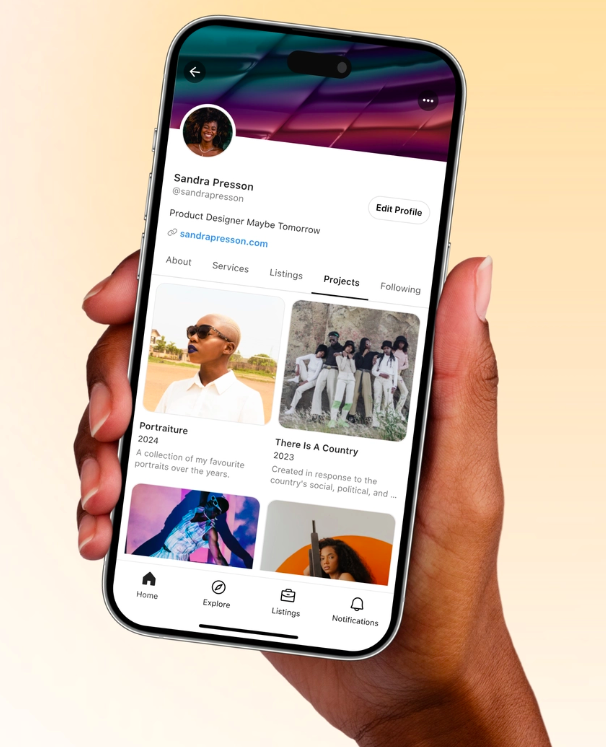
Screenshot of NewComma 02 © NewComma, 2026
Natalie, echoing these words, what does your platform NewComma make possible today that wasn’t possible three years ago – for whom and in what specific place?
Natalie: What didn’t exist three years ago, or even six months ago, is the aggregation of African creatives at this scale, with everything in one place. Other platforms focus purely on directories. We have that, but we also have a social feed that shows how cultures and sensibilities are moving in real time, region by region. There’s been no aggregation this precise outside of LinkedIn, Instagram, or TikTok, and those are all owned by entities that aren’t locally African. NewComma is.
We also support a programme of micro-grants. Since February 2022, we’ve awarded £100 every month to an African creative, covering that first thing you need to get a venture off the ground. Our survey confirmed grants are the second most sought-after opportunity type on the platform, at 69%. That tells us the demand for funded creative work is real and ongoing.
The other shift is intentionality. More African creatives across the diaspora are leaning into their local cultures in their work rather than diluting who they are to access opportunities. NewComma is built around that. The ethos is simple: African creatives shouldn’t have to change to get what they deserve. We started on the continent first, then expanded to the diaspora, so that cultural representation is grounded before it scales.
One thing I’d add: African creatives are becoming more strategic about documentation and narrative. That matters beyond the creative work itself. AI models are being trained on predominantly Western data. If we’re not distilling our own insights explicitly, we get left out of those systems too. NewComma plans to integrate AI tools by the end of the year, and we’re already running workshops in London, Accra, and Nairobi, with Lagos and Cape Town coming next.
More articles to read in the framework of S+T+ARTS Afropean Intelligence:
“A Situated Reflection on Knowledge, Memory, and Collective Futures.” by Chelsi Goliath (WITS University – Johannesburg)
“Afropean Intelligence Symposium: The Archive is Alive.” by Sari Hellara Hernandez (Vrije Universiteit – Amsterdam)
“The S+T+ARTS Afropean Intelligence Archive” by Céline Delatte for AfricaMuseum