S+T+ARTS AQUA MOTION – Sylloge
Sylloge
Share your work
Why a Sylloge
Contributions
Contact
+ A living knowledge commons on water, culture and innovation
The S+T+ARTS AQUA MOTION Sylloge is a living, open-access knowledge hub that documents, translates and amplifies the intersection of art, science, technology and society in relation to water challenges across Europe and.
The Sylloge is conceived as a curated narrative space connecting local water realities with artistic experimentation, scientific insight, and technological innovation — making complex water issues accessible, meaningful and actionable for diverse audiences.
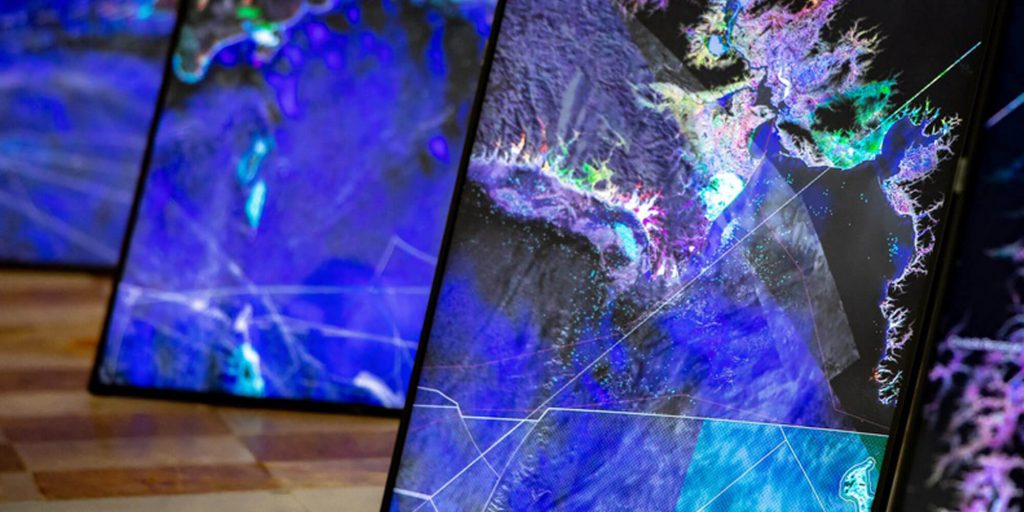
Credit: Oceans in Transformation / Territorial Agency – John Palmesino and Ann-Sofi Rönnskog (INT),
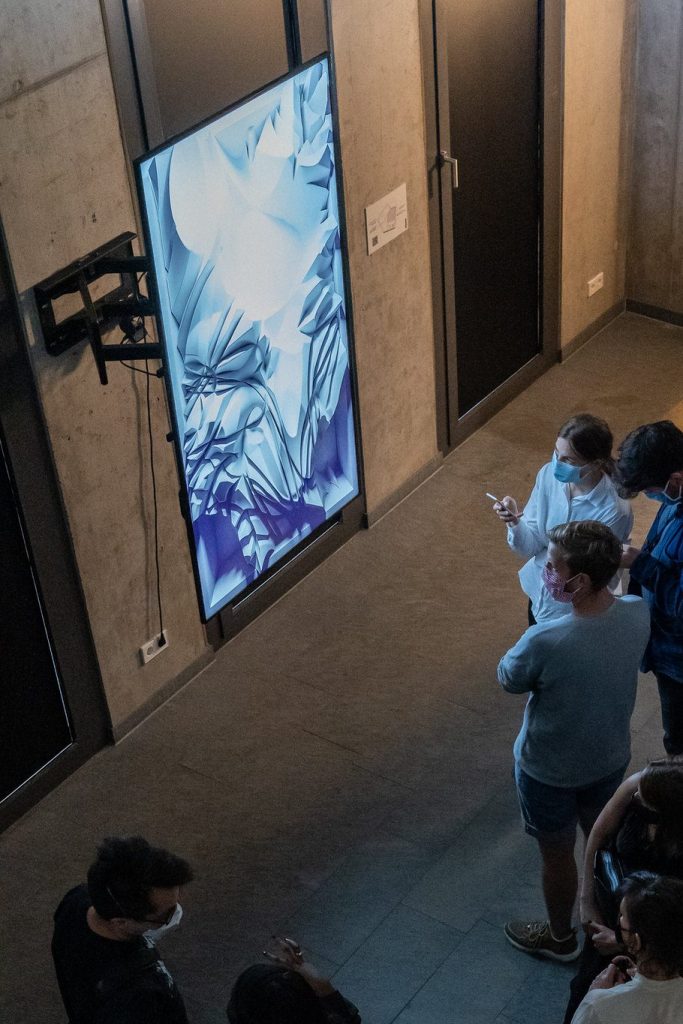
+ Share your work with the S+T+ARTS Aqua Motion Sylloge
If you are exploring water through art, science, technology, education, community practice or interdisciplinary collaboration, we invite you to submit your work and become part of a growing European knowledge commons that makes water challenges visible, meaningful and actionable. We welcome contributions in many forms, including
- artistic works (visual arts, digital, sound, performance, installations, storytelling, artistic research)
- science–art and tech–art collaborations
- community-based or grassroots initiatives connected to water management, conservation or literacy
- educational projects and methodologies
- digital tools and visualisations
- cultural, historical or speculative approaches that reimagine our relationship with water and society
- research publications, among others!
Submissions can represent ongoing, completed or evolving work, and may come from artists, collectives, researchers, educators, community groups or interdisciplinary teams.
All contributions are reviewed through a light validation process to ensure relevance and suitability for public dissemination.
To be featured in the Sylloge, simply complete our quick submission form here:
+ S+T+ARTS Aqua Motion | Sylloge Contributions – Fill out form
+ Why a Sylloge?
Water challenges are local, complex and deeply entangled with ecosystems, infrastructures, communities and culture. At the same time, meaningful transformation depends on how knowledge is shared and mobilised.
The Sylloge exists to bring together and spotlight:
- art-driven perspectives that shift narratives and engage publics,
- scientific insight and research-based evidence,
- technological innovation with tangible applications,
- community knowledge and practices, including grassroots and place-based responses.
The S+T+ARTS AQUA MOTION Sylloge aims to bring together artistic, scientific, technological and community-based knowledge on water sustainability into a single, coherent and accessible space—creating a shared reference point where diverse perspectives can meet and reinforce each other. It will also contribute to strengthening water literacy, inspiring behavioural change, and enabling broader public engagement, using compelling, art-driven and knowledge-based storytelling to make water challenges tangible and meaningful for different audiences. In doing so, the Sylloge will serve as a lasting reference and evidence base for future S+T+ARTS initiatives, as well as for researchers, cultural practitioners, educators and policymakers working at the dynamic intersection of water, culture and innovation.
+ Contributions
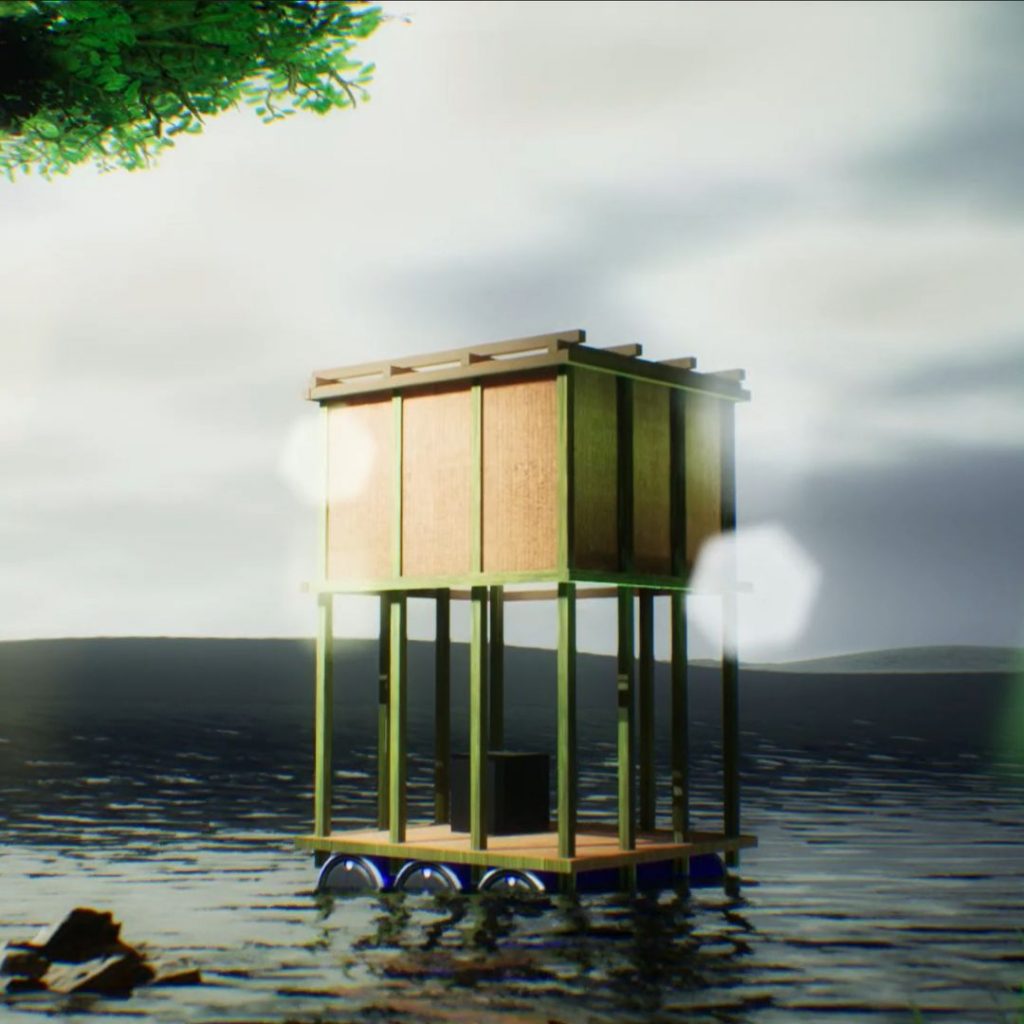
Laissez-faire: Pavilion for Climate
By Jibril Baba & Peace Olatunji
The core of my work seeks to recover the wisdom of past Nigerian traditional knowledge and transpose it into language of the present. My work bridges art, architecture, AI, and community research to reimagine heritage and climate futures.
Summary of the work:
Laissez-faire is a floating, wind-propelled pavilion equipped with environmental sensors and AI that navigates the historical waters of Alexandria, Egypt. The project investigates how artificial intelligence and psychogeographic practices can reshape our understanding of space: through drift, memory, and emotional resonance. It proposes a fluid psychogeography, where the method of drifting through space is driven by the atmosphere. The pavilion is also influenced by the environmental data and cultural memory it collects on its route. As the pavilion floats, it collects live data — water temperature, turbidity, PH, air humidity. Alongside this, it collects ambient sounds and geo-tagged oral stories. As a result, it becomes a sort of sentient vessel. One that listens to both the visible climate and the invisible aura of a city shaped by water.
Dimensions:
+ Digital tools, visualisations, or narratives exploring water systems and futures
+ Artistic works (visual arts, digital art, sound, performance, installations, storytelling, artistic research)
50°47’300″N 4°33’341″W
By Alexis Over-Papatzaneteas
Alexis Over Papatzaneteas is a multidisciplinary artist who transforms complex data into visual metaphors that reveal unseen global narratives. His work translates abstract data into accessible, emotive experiences.
Summary of the work:
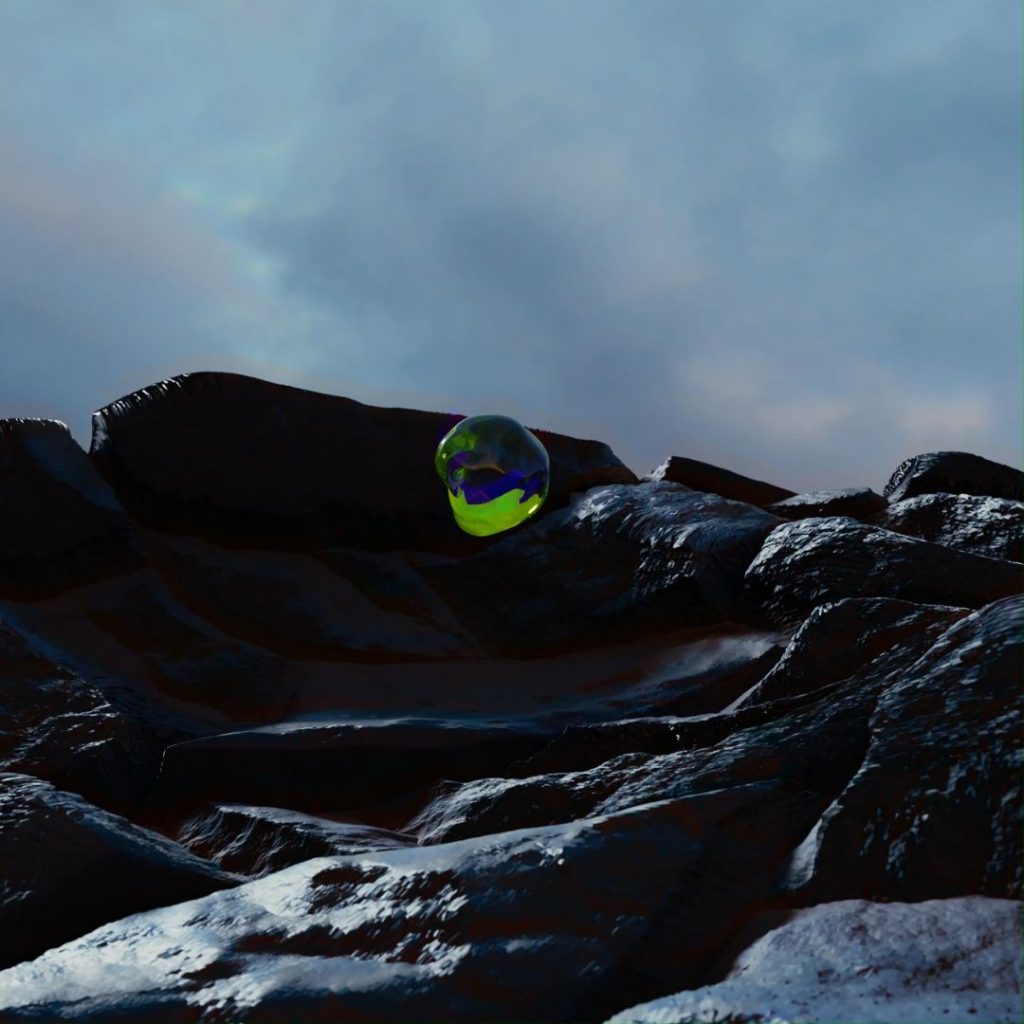
50°47’300″N 4°33’341″W is based on the interpretation and manipulation of raw sewage discharge data provided by Surfers Against Sewage to act as an expounding interface between science and art, presenting data as a symbolic visual form. The use of data in this context acts as a means of provocation, a shift from empirical representations of pragmatism into an emotive aesthetic form.
Dimensions:
+ Digital tools, visualisations, or narratives exploring water systems and futures
+ Artistic works (visual arts, digital art, sound, performance, installations, storytelling, artistic research)
Manifesto
Terricola
By Solimán López
Artist whose practice operates at the intersection of art, science, technology and ecological transition. His work investigates how information, memory and life can be stored, transmitted and transformed across physical, biological & digital systems.
Summary of the work:
This is an artistic document that presents a snapshot of the current state of humanity across different domains such as economics, ethics and morality, psychology, geopolitics, the environment and art, among others.
Dimensions:
+ Educational projects, tools, or methodologies focused on water;
+ Artistic works (visual arts, digital art, sound, performance, installations, storytelling, artistic research)
The mesmerising sand
By Anom Mathur
Myself Artist Anmol Mathur from Indore City Madhya Pradesh (India) my art journey is started when I was in school . My name is knowing with experimental art with modern art and abstract art in various theme by discipline manner.
Summary of the work:
our culture based (india ) water is most angelic wish in entire world, sea is the value of humans life, animal and humans both are depends on sea , our culture our structure of countries depend on sea , most important species are live in sea , nature is real beauty of earth, earth is eternity of water , water is need and food,
Dimensions:
+ Educational projects, tools, or methodologies focused on water;
+ Artistic works (visual arts, digital art, sound, performance, installations, storytelling, artistic research)
Counter-narratives of water
By DISNOVATION.ORG
DISNOVATION.ORG is a research collective set up in Paris in 2012. They create artworks staged as laboratory experiments focused on energy, ecology, and economics, which act as catalysts for imagining futures that diverge from prevailing narratives.
Summary of the work:
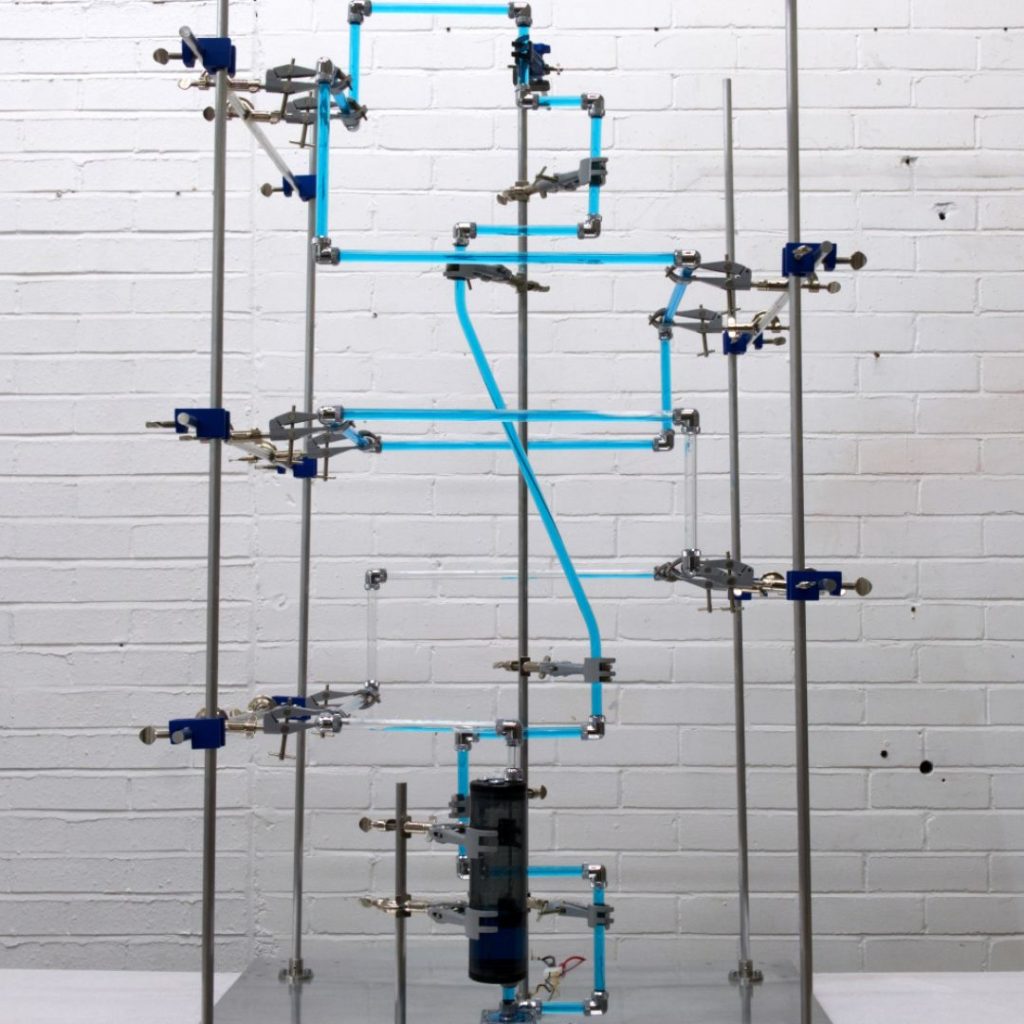
In modern times, the abundance of water and its constant availability paradoxically make it invisible. Underground circulation and complex hydrological systems, such as karsts, are relegated to the background of everyday life. Water becomes a mere factor of production.
Dimensions:
+ Cultural, historical, or speculative approaches to water and society;
+ Artistic works (visual arts, digital art, sound, performance, installations, storytelling, artistic research)
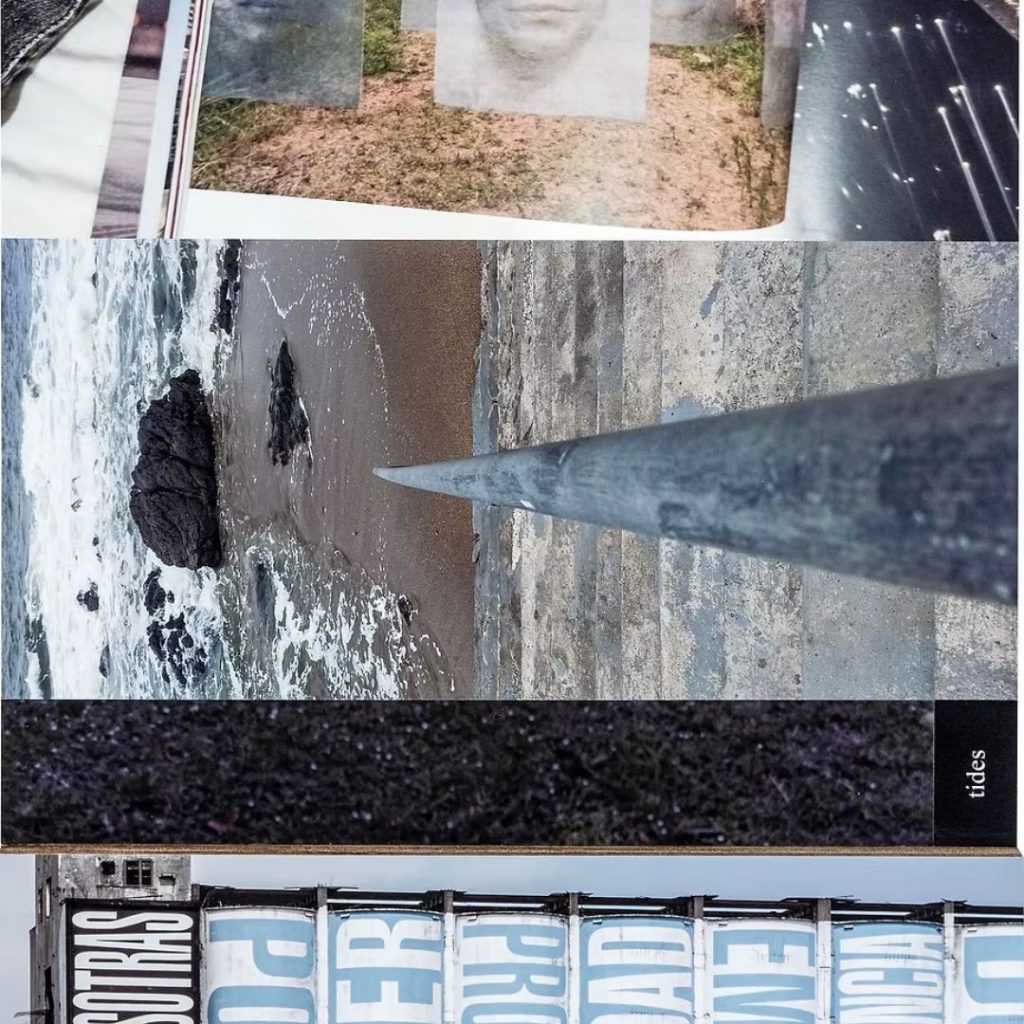
In-between-ness: a speculative project on liminal life and water culture
By Jorge Conde
Jorge Conde is a visual artist based in Barcelona. He’s best known for his installations expanding the limits of photography and visual culture. His work deals with the climate emergency, water culture, and the tensions between history and memory.
Summary of the work:
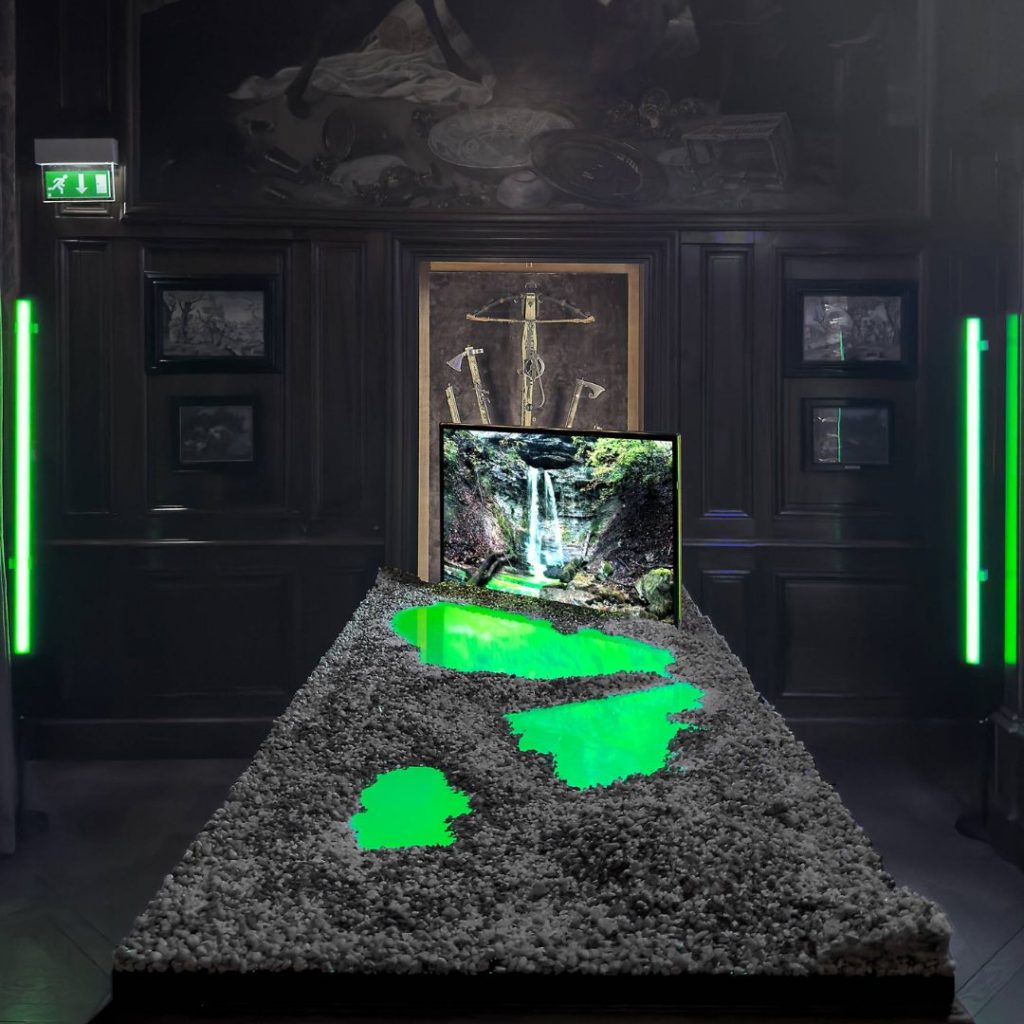
HYPOTHESIS: What if the sea level were to rise by 1.5 meters in the Catalan Mediterranean and the mouth of La Plata River along both the Argentine and Uruguayan Atlantic coastlines?
Dimensions:
+ Artistic works (visual arts, digital art, sound, performance, installations, storytelling, artistic research)
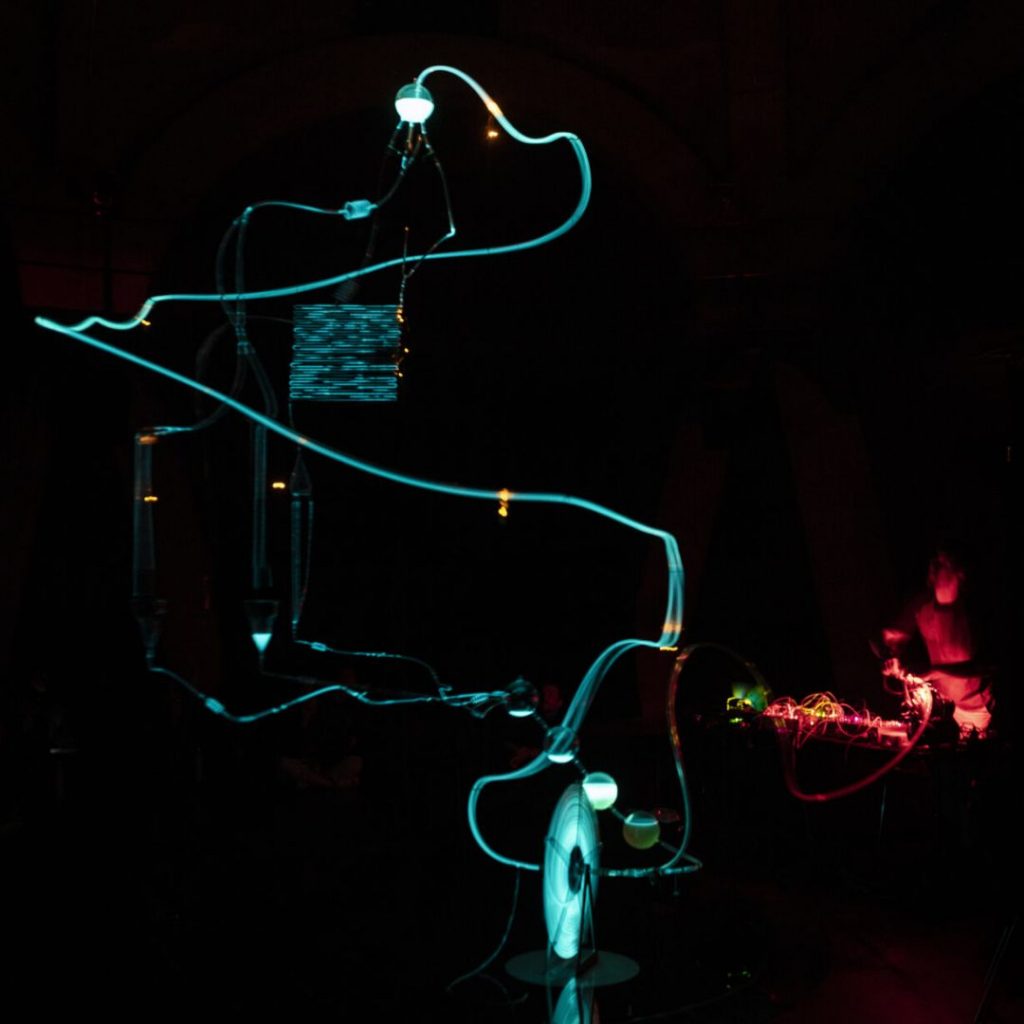
Luciférine
By Thomas Laigle
Thomas Laigle is an artist. His work is rooted in an Art–Science approach and developed through close collaborations with researchers in entomology, microbiology, oceanology, giving rise to works that challenge anthropocentric modes of perception.
Summary of the work:
Luciferine is a sonic and sculptural performance for bioluminescent bacteria. Its title refers to luciferin, the molecule at the core of bioluminescence, the light emitted by living organisms. In darkness, spectators follows the flow of liquid bacteria within a glass sculpture that functions both as instrument and container. As the living light travels, it reveals the shape of a chimerical entity and acts as a random, living musical algorithm: conductive sensors translate its fluctuations into signals that activate analog synthesizers, generating a live, evolving soundscape.
Dimensions:
+ Artistic works (visual arts, digital art, sound, performance, installations, storytelling, artistic research)
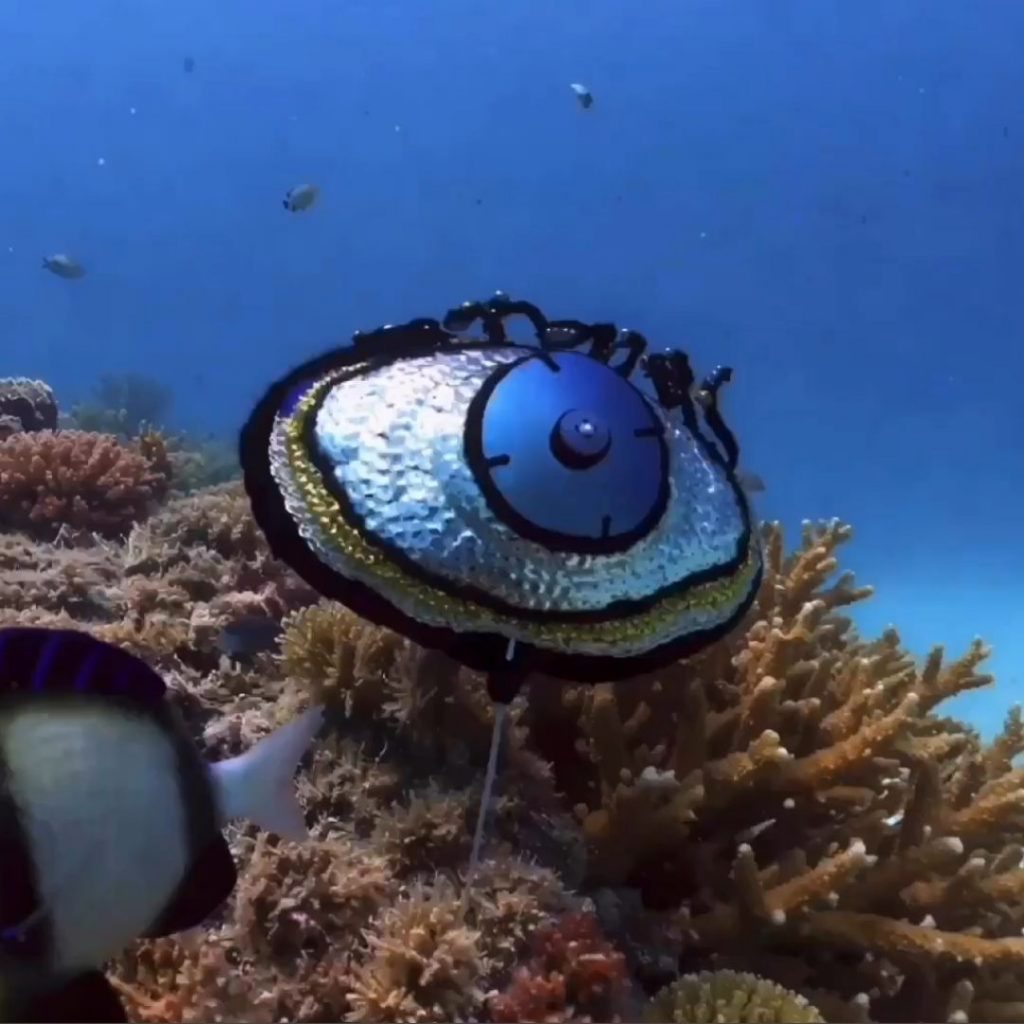
Water gives life to everything
By Nathalie Leung Shing
Self-taught artist Nathalie Leung Shing works with recycled textiles & natural materials to explore sustainability & storytelling. Her practice is rooted in environmental advocacy through Bin Your Butts and Water Gives Life to Everything campaigns.
Summary of the work:
In Mauritius, water can no longer be taken for granted. Prolonged droughts dry the land, while sudden heavy rains bring destruction. We are pushing nature beyond its limits. Plastic waste from everyday life flows into the ocean, where fish and marine animals mistake it for food, suffer, and die. Water gives life to everything, yet it is increasingly under threat. Combining video, photography, and fiber art, the installation confronts water as a life-giving force under threat and calls on viewers to pause, care, and take responsibility.
Dimensions:
+ Artistic works (visual arts, digital art, sound, performance, installations, storytelling, artistic research)
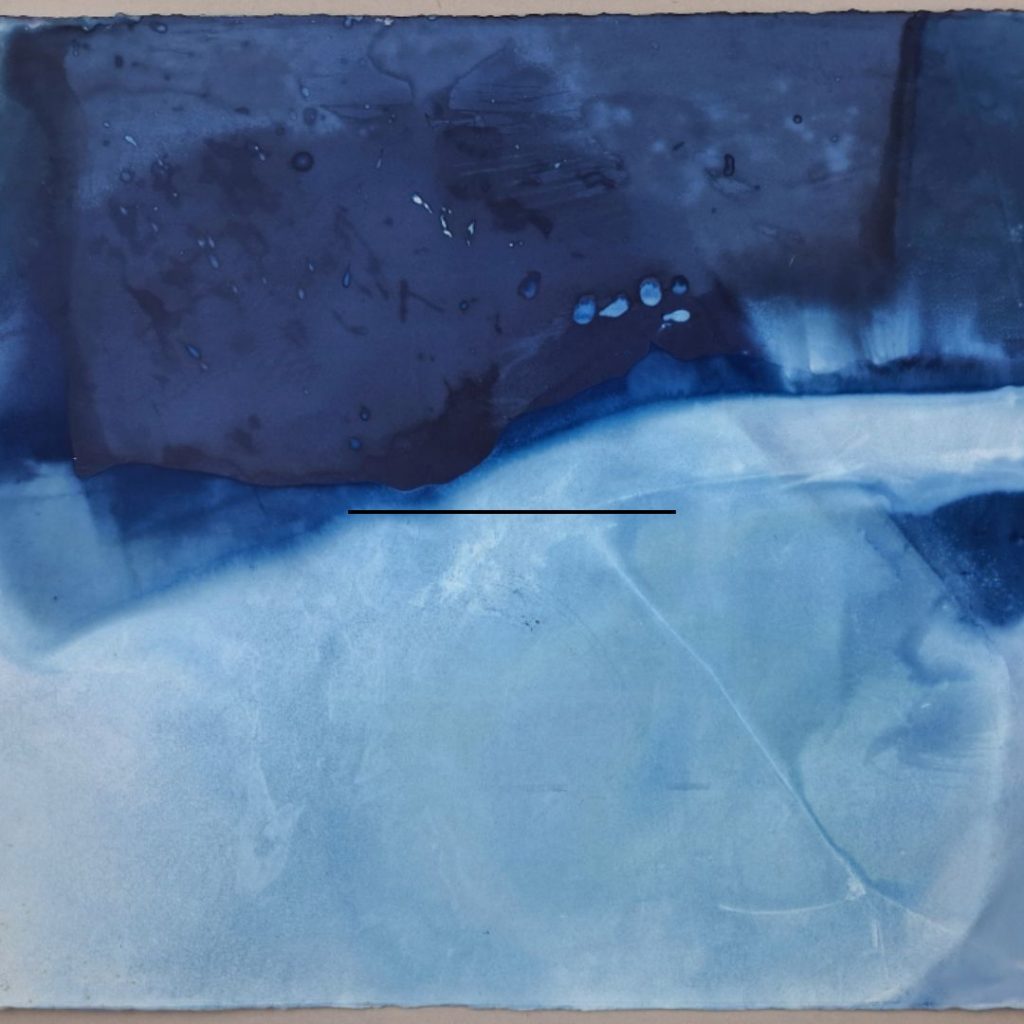
Waterscapes
By Annalisa Mercuri
I am an Italian artist and scientist based in Italy. My work bridge science and art, transforming data into visual artworks that give form to the invisible. I create drawings, cyanotypes & oil paintings exploiting and exploring materials properties.
Summary of the work:
Waterscapes is an ongoing series exploring diverse water sources through cyanotype, an historic contact technique. Prussian blue is formed through the chemical reaction occurring when iron salts are exposed to UV light. Water is used to remove unreacted solution. Yet every water source has a unique chemical composition, consisting in dissolved salts, organic and inorganic matter, microorganisms, soil, pollutants, or microplastics. Furthermore, each water body has distinct hydrodynamic forces and can exist in different physical states. These variables influence how each water type reacts with the treated paper under natural light, generating unique images from this chemical encounter. The create images are not only shaped by material interaction but also by space and time. Light conditions, season, weather, wind, shadows, exposure time, and the artist’s gesture all contribute to the final result. Often created at sunrise or in secluded natural settings, these works emerge through immersion, meditation, and reflection. Each image becomes a record of a specific hic et nunc moment and a meditation on water’s diversity, fragility, and our relationship with the natural landscape.
Dimensions:
+ Artistic works (visual arts, digital art, sound, performance, installations, storytelling, artistic research)
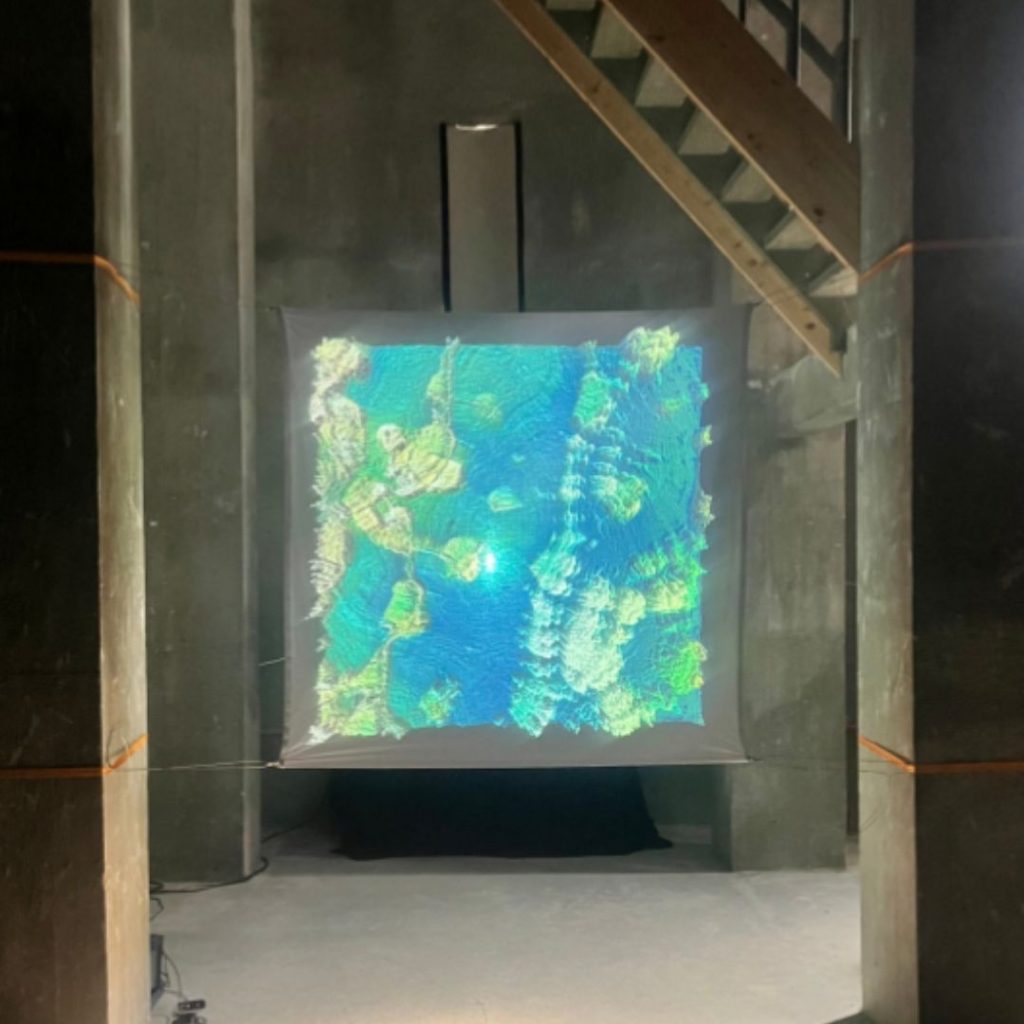
Imagined
Islands
By Leon Butler
Leon Butler is an artist and academic working at the intersection of art and technology. He has exhibited internationally and completed major residencies. Recent projects include Foolish Flame, Imagined Islands and Dwelling
Summary of the work:
Imagined Islands is a digital art installation that uses machine learning to explore the fragile topographies of small coastal outcrops across Europe. The project investigates how these sites embody both natural resilience and vulnerability, while addressing urgent issues such as coastal erosion and climate change.
Dimensions:
+ Artistic works (visual arts, digital art, sound, performance, installations, storytelling, artistic research)
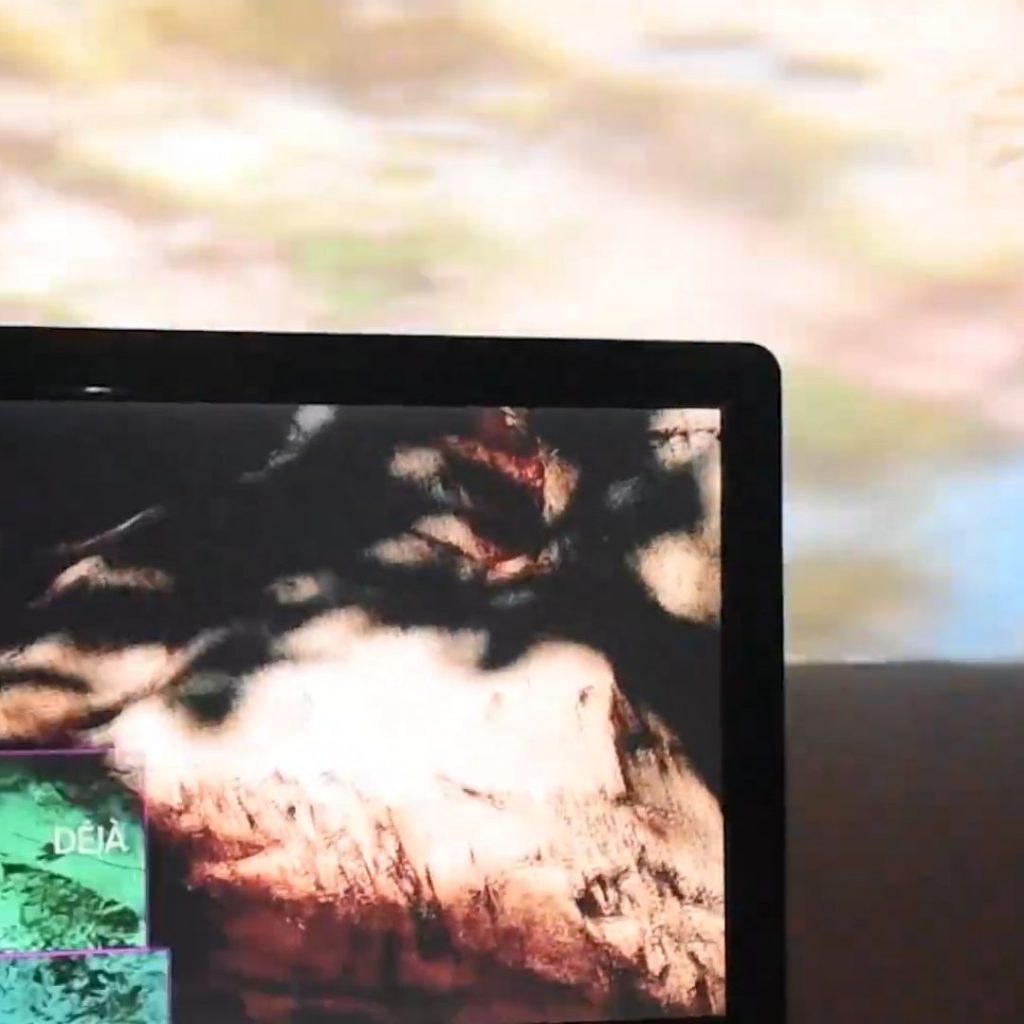
What
Escapes
By Yannis (Ioannis) Gkouzoumas
Greek multimedia artist based in Brussels. Holds degrees in Computer Engineering (AUTh) and Visual Arts (LUCA School of Arts). Works across video installation, performance, and new media exploring what resists technological capture.
Summary of the work:
What Escapes explores the failure of technological systems to capture living movement within aquatic ecosystems.
Dimensions:
+ Artistic works (visual arts, digital art, sound, performance, installations, storytelling, artistic research)
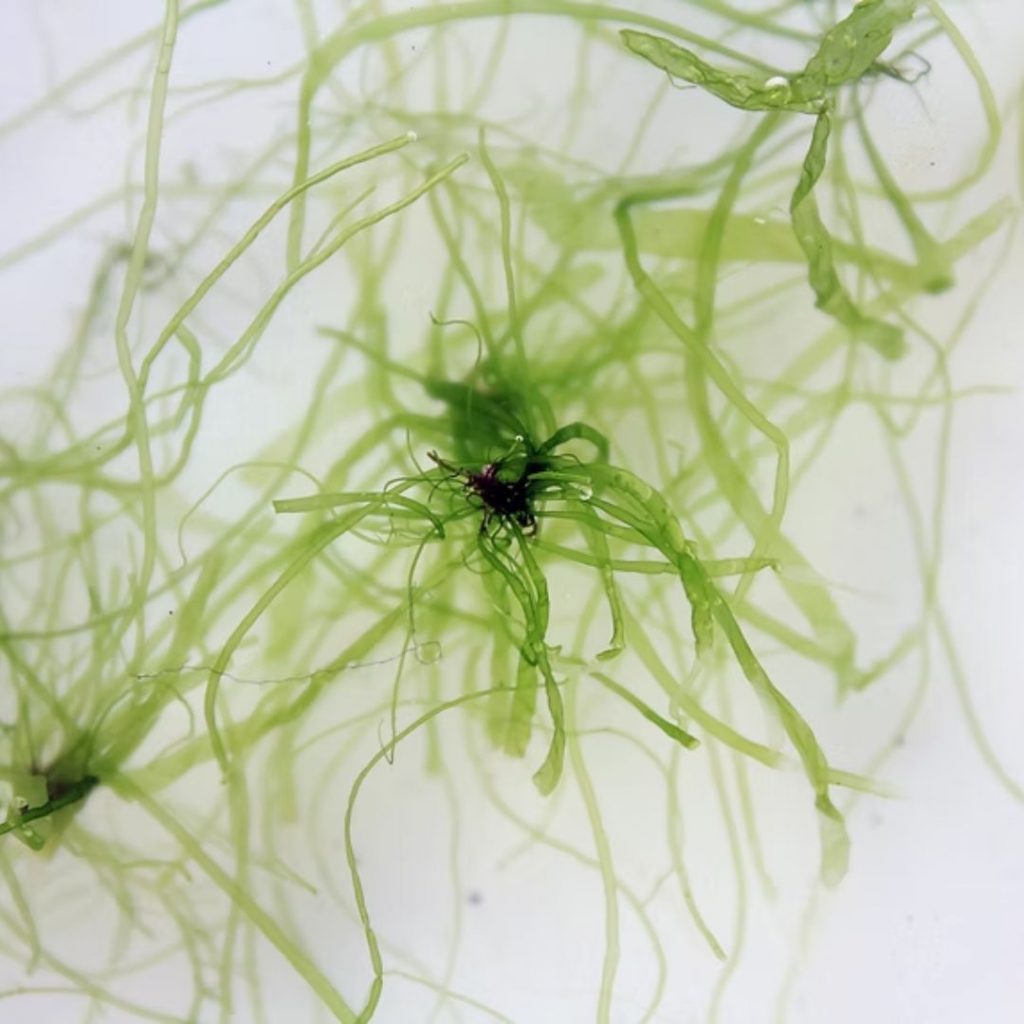
Green Matters – Algae gatherer´s handbook
By Mia Makela
Mia Makela is a media artist and cultural historian merging art with research and ecology. She works mainly with videoin order to explore ecocentrism. A pioneer in the field of live cinema, she has shown her work all over the globe.
Summary of the work:
Green Matters is a project in which Mia Makela examines the eutrophication of the Baltic Sea from an unusual perspective. She experiments with green macroalgae and combines them with traditional rug-making techniques. The process brings together diverse knowledge, from ancient craft skills to phycology and environmental politics, turning the artwork into an attempt to draw attention to and care for a sea threatened by eutrophication.
Dimensions:
+ Artistic works (visual arts, digital art, sound, performance, installations, storytelling, artistic research)
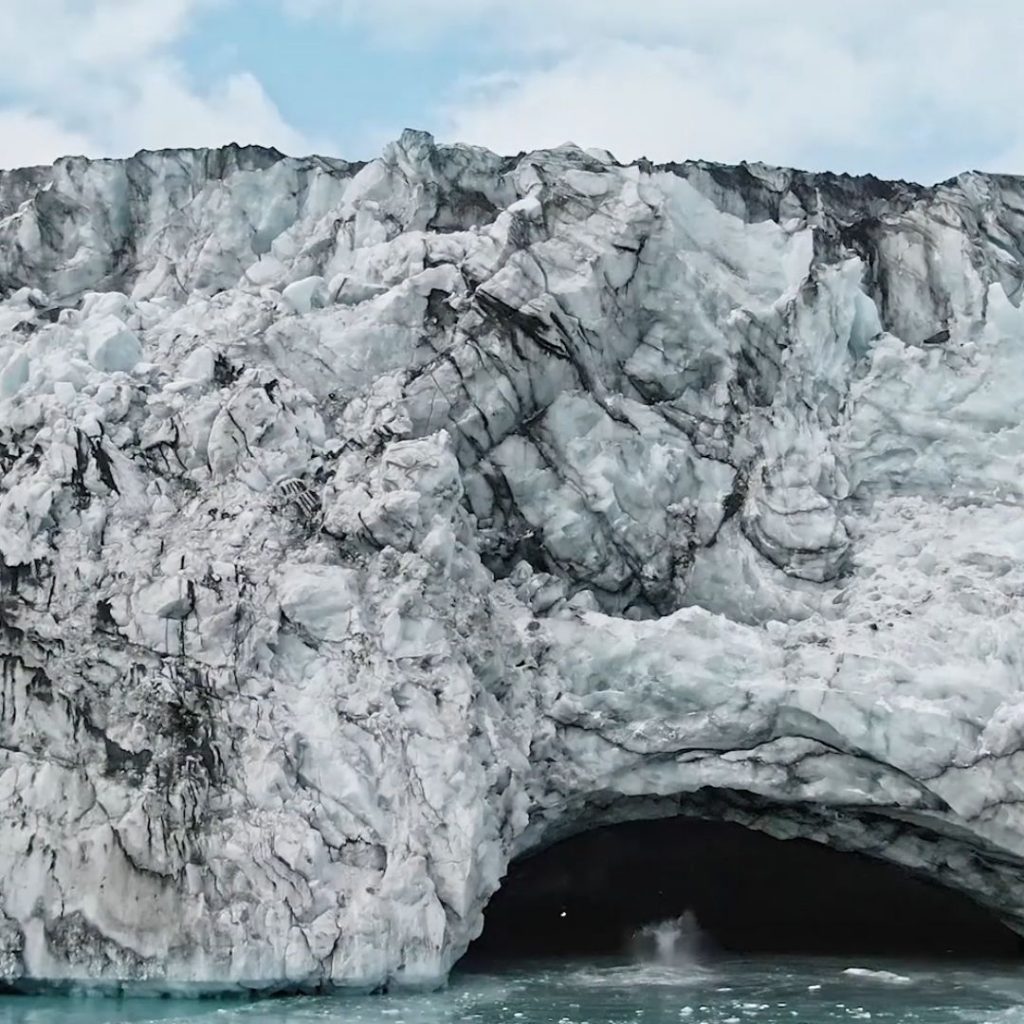
Evanescet. The last glaciers
By Pepe molina cruz
Pepe Molina Cruz es realizador y fotógrafo especializado en documental creativo. Su proyecto “Evanescet” investiga la desaparición de los glaciares combinando arte, ciencia y tecnología.
Summary of the work:
Evanescet is an artistic research project that examines the disappearance of glaciers as a physical, temporal and cultural process,
Dimensions:
+ Digital tools, visualisations, or narratives exploring water systems and futures
+ Artistic works (visual arts, digital art, sound, performance, installations, storytelling, artistic research)
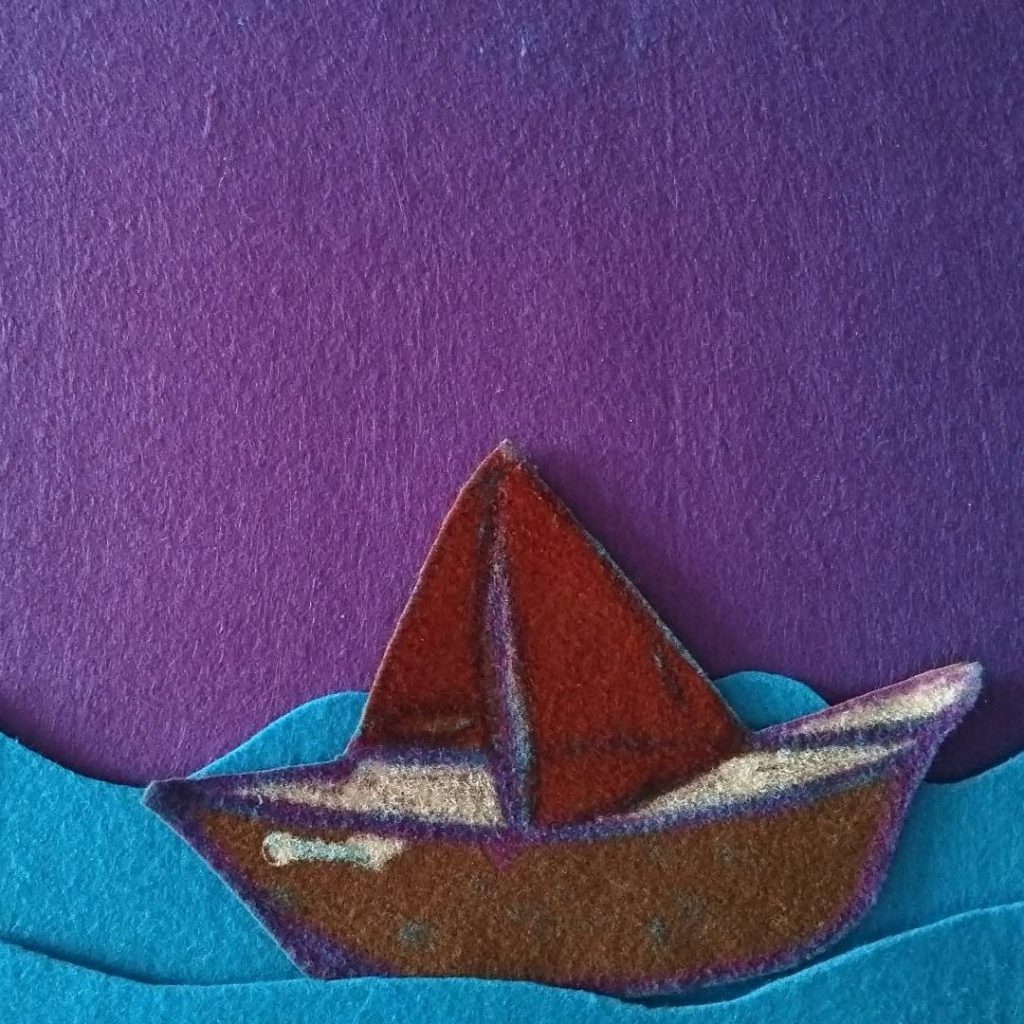
RiVER – another look at the city / Flood Embassy
By Periferias dibujadas
periferias dibujadas investigates urban transformations and conflicts through art, and creates spaces where children, young people and intergenerational groups can research, narrate and creatively intervene in their urban context
Summary of the work:
RiVER: How do the emotional, political, economic and social landscapes change if we locate the river in the centre of them? Ri/VER refers to ‘river’, but also stands for re-ver, i.e. revise, see from a different angle. Thinking through the river, shifts the anthropocentric and short-term focused understandings, thus we can move stagnant conversations.
Dimensions:
+ Educational projects, tools, or methodologies focused on water;
+ Artistic works (visual arts, digital art, sound, performance, installations, storytelling, artistic research)
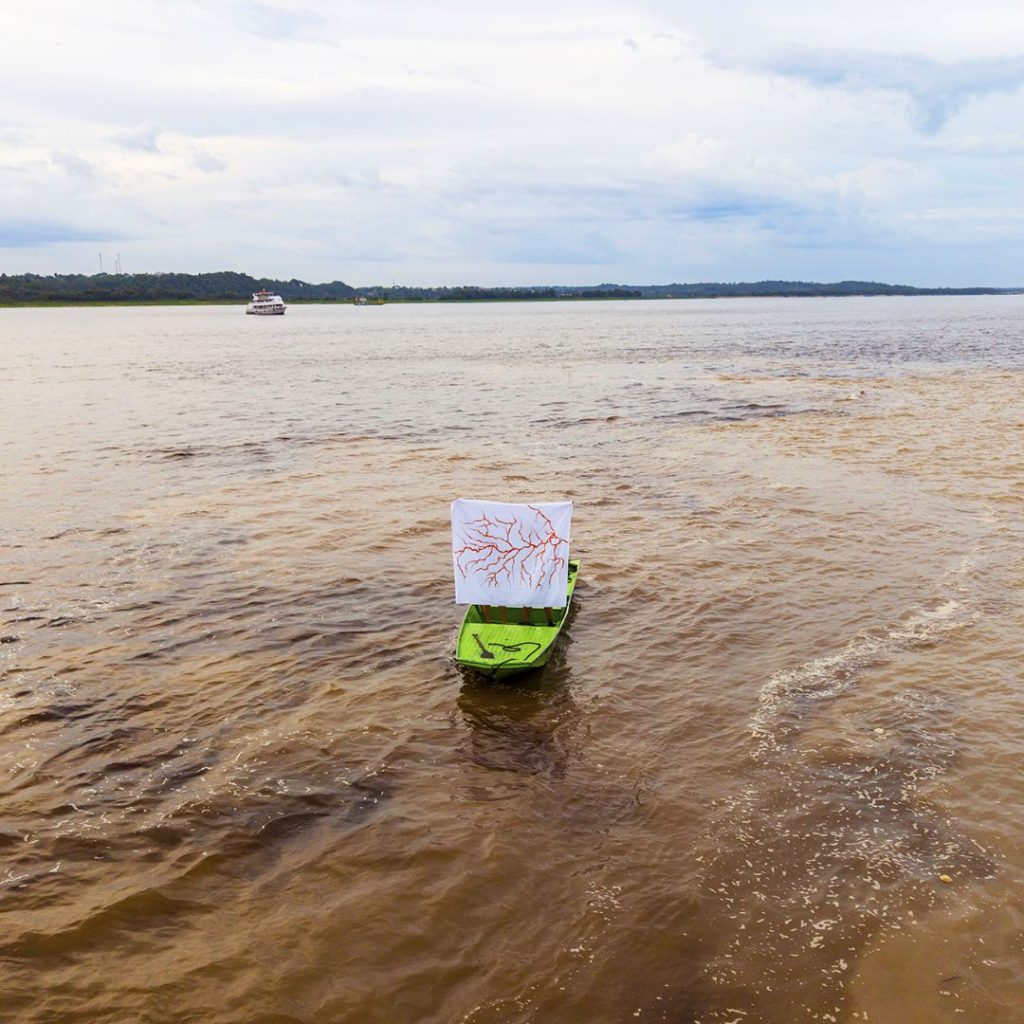
FLUMEN
By Andrea Conte – studio Andreco – Climate Art Project – Futurecologies
Artist trained in Environmental Engineering (degree and PhD) on Nature-Based Solutions for sustainable water management. He founded Climate Art Project and FLUMEN. He is affiliated with NICHE research groups on Ecological Art Practices and Water.
Summary of the work:
FLUMEN is an ecological art practice and methodology bridging artistic research, environmental science, and socio-ecological activism around rivers and riparian green spaces. Initiated by Climate Art Project and Studio Andreco with an international partner network, it develops public, site-based formats combining performance and civic rituals (landscape flags and small offerings to more-than-human entities); collective citizen-science monitoring (water and ecosystem sampling); workshops, walks, exhibitions, and tree plantings; and the translation of environmental data into data-driven sculptures. FLUMEN also employs embodied approaches informed by hydrofeminist theory. Its aim is to shift attention from water use toward care, framing rivers as entities deserving respect and rights. Operating as both a research network and a campaign, it has expanded into Future Environment, focusing on environmental racism and necropolitics. Projects have taken place in Italy, China, India, Morocco, Portugal, Germany, the U.S., and Brazil, and have been presented at MAXXI (Rome), MAMbo (Bologna), the China Pavilion at the Triennale di Milano, NYU Shanghai, Duke University, and Tongji University.
Dimensions:
+ Community-based or grassroots initiatives related to water management, conservation, or literacy;
+ Artistic works (visual arts, digital art, sound, performance, installations, storytelling, artistic research)
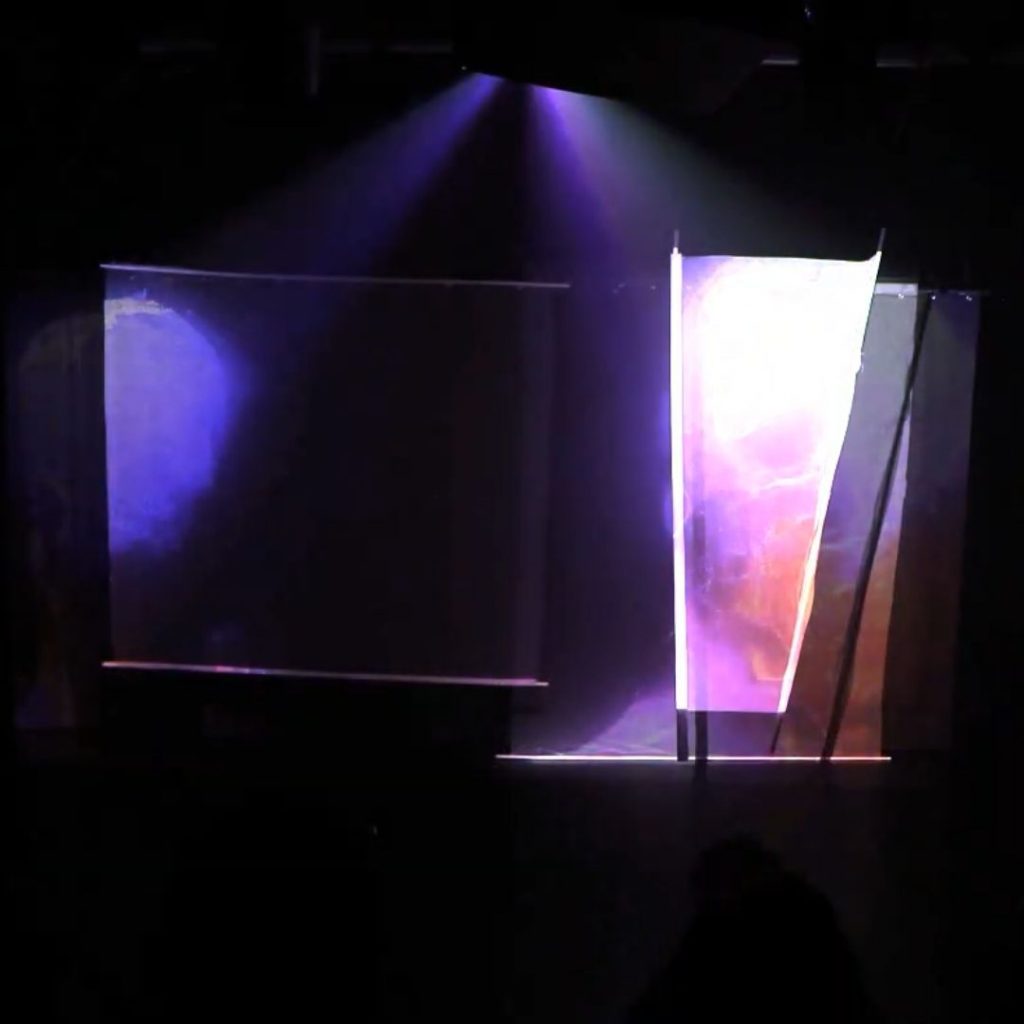
Oxygen Holocaust
By Inervo art
Inervo art is an international dance/theater company founded in Madrid in 2014. It explores interdisciplinary performance and collaborating with scientists. The company presents its work internationally at festivals and museums.
Summary of the work:
OXYGEN HOLOCAUST is an original work by Inervo Company merging dance, theater, and technology to explore the relationship between art and science. Over the past two years, the team developed the Luzlíquida projects and the installation Cuerpos Errantes in collaboration with the Institut de Ciències del Mar in Barcelona and the Espronceda Center for Contemporary Art, researching the connection between marine science and artistic creation.
Dimensions:
+ Artistic works (visual arts, digital art, sound, performance, installations, storytelling, artistic research)
Mothers of the Deep. Beherzigung’s Voices
By Giovanna Turrini – BRIDGES
Venice-born sound artist (M.A.), SIAE member. Merges bioacoustics, scientific datasets, field recordings, AI-experiments. CHIGIANAradioarte 2025. Certified in inter-media and SDG pedagogy. Project mgmt (€20k, e.g. Goethe-Institut).
Summary of the work:
Rooted in Goethe’s Urphänomen, the project explores the etymological bond Matter-Mater of the voice, transforms bio-acoustic data into a narrative of resilience across space and time, is a cross-species try-out between the “jazz musicians of the abyss” and updated classical poetry.
Dimensions:
+ Artistic works (visual arts, digital art, sound, performance, installations, storytelling, artistic research)
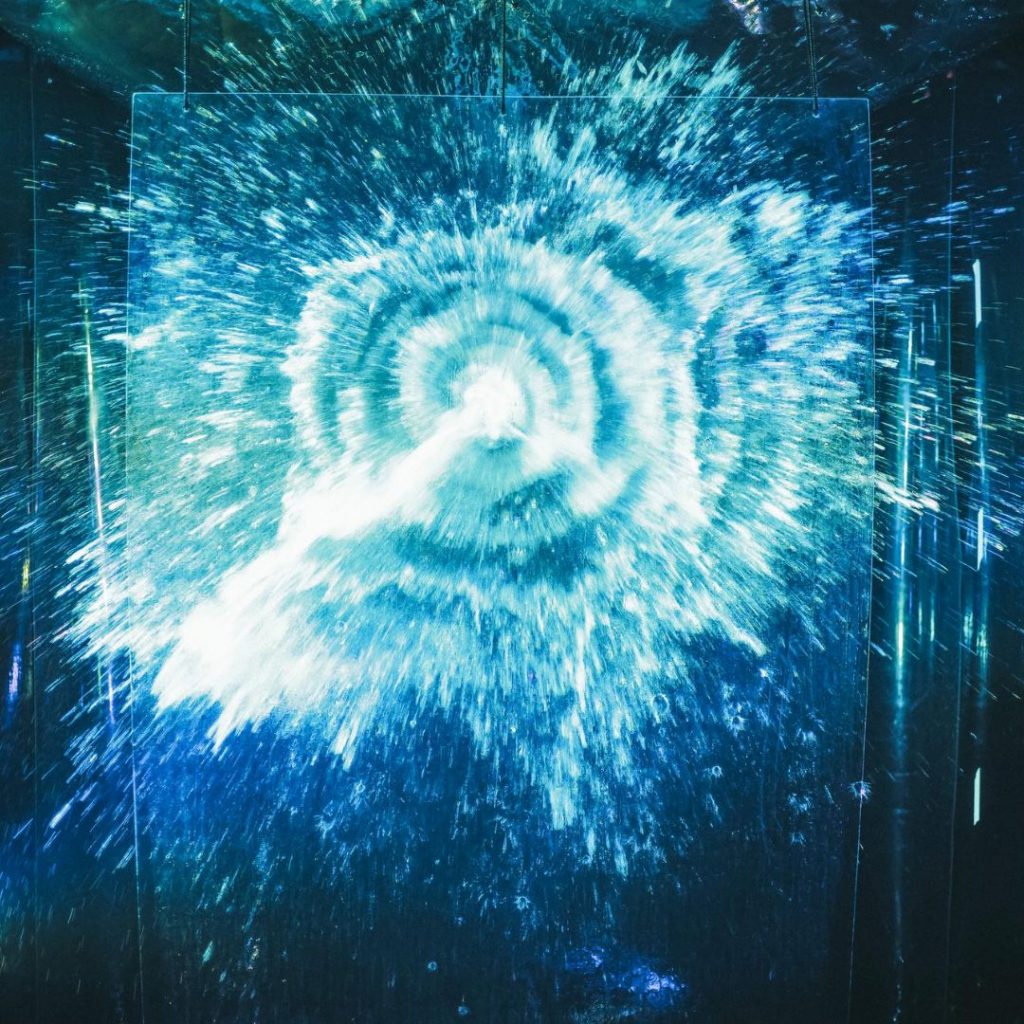
Body of Water
By Tamar Blom and Federico Murgia
Federico Murgia and Tamar Blom are artists with independent practices collaborating on Body of Water. Federico works with light and spatial systems. Tamar works with movement and embodied research, exploring physical presence and sensory awareness.
Summary of the work:
As you realize you are only lightly touched, tension slowly dissolves. The body steadies. You begin to meet the water directly. Flickering light enters, transforming the jet patterns into shifting abstractions. The experience can feel disorienting, expansive, even cosmic, like moving through clouds, storms, or a vast inner landscape.
Dimensions:
+ Artistic works (visual arts, digital art, sound, performance, installations, storytelling, artistic research)
RiverSong
By Rasak Akorede, David Osaodion Odiase, hn. lyonga
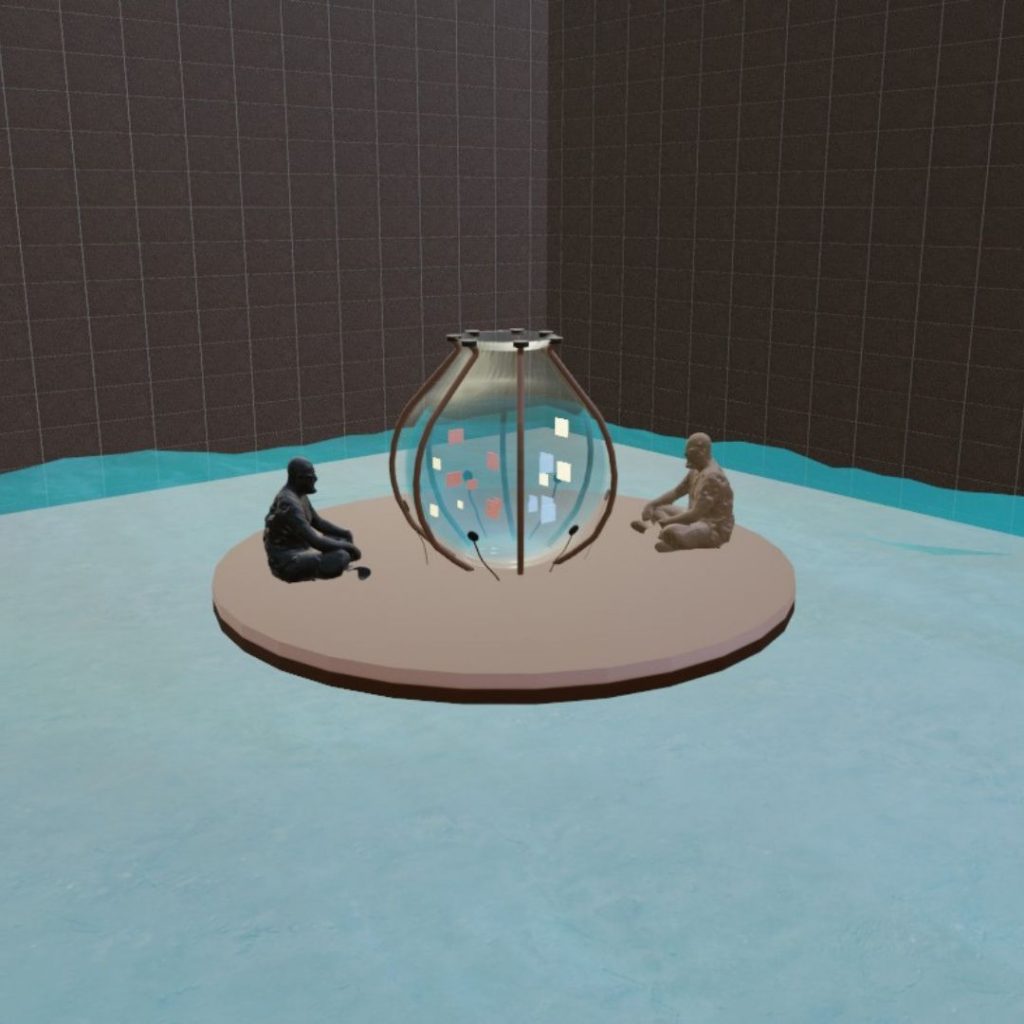
RiverSong is an interdisciplinary collective of artists, writers, and technologists exploring sound, water, and cultural memory through interactive installations combining hydroacoustics, machine learning, and Afrocentric symbolic systems.
Summary of the work:
RiverSong invites audiences to experience water not only as a resource but also as a cultural and ecological medium. By making the movement of sound in water visible and participatory, the installation encourages reflection on how listening can reveal relationships between human presence, environmental systems, and cultural knowledge.
Dimensions:
+ Digital tools, visualisations, or narratives exploring water systems and futures
+ Artistic works (visual arts, digital art, sound, performance, installations, storytelling, artistic research)
Hydrosymbiotic Entities
By Dora Siafla
Dora Siafla is an interdisciplinary artist working across visual and computational media, exploring data-driven forms, speculative systems, video, and user interaction. She is an incoming PhD student in DXARTS at the University of Washington.
Summary of the work:
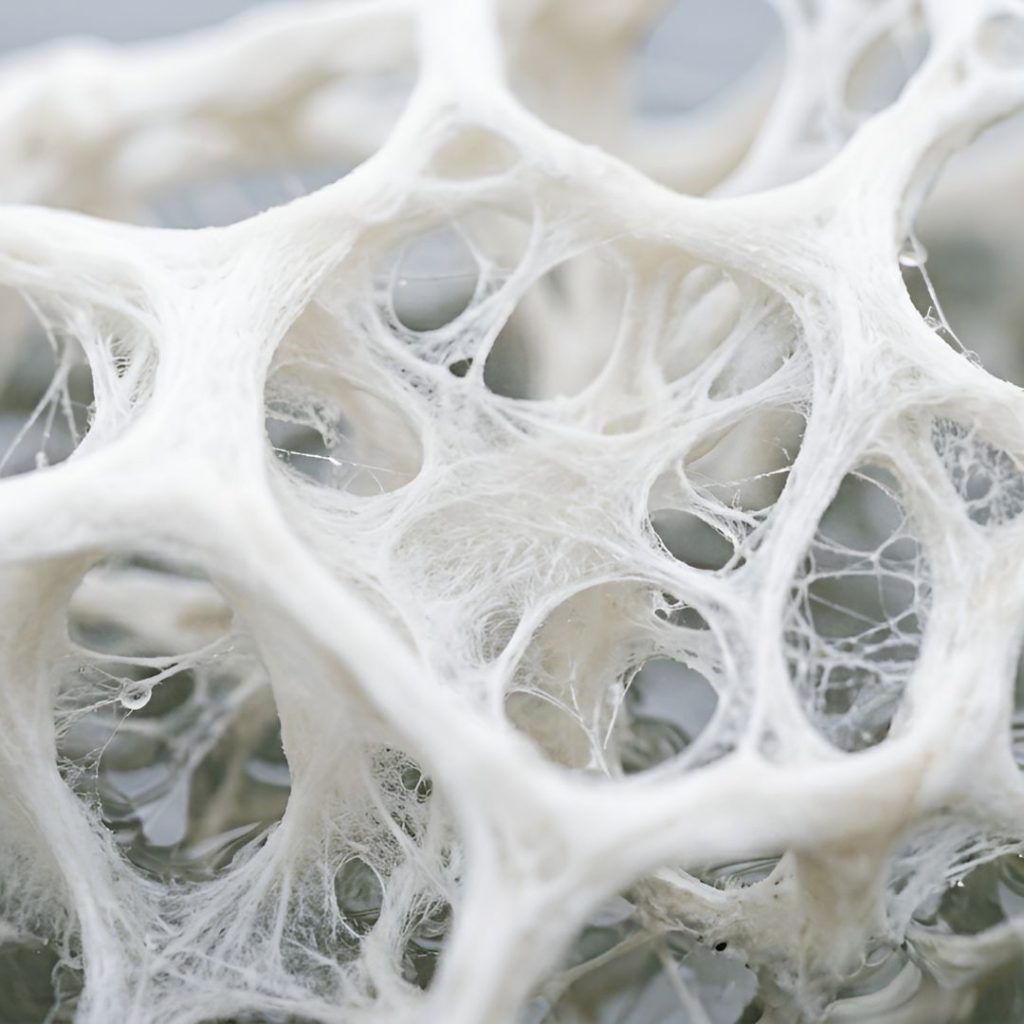
Hydrosymbiotic Entities is a speculative design project envisioning future ecological bodies that actively remediate degraded aquatic environments. Designed for stagnant and slow-moving waters such as ponds, reservoirs, and artificial basins, these floating entities function as emerging forms of environmental agency dedicated to pollutant filtration, exchange, and ecological adaptation.
Dimensions:
+ Artistic works (visual arts, digital art, sound, performance, installations, storytelling, artistic research)
Pelagia
By Sara Bonaventura
Sara Bonaventura is an Italian multimedia artist. Her works have been exhibited worldwide such as: the NYC Anthology Film Archives, the Ann Arbor Film Festival, the Athens Digital Arts Festival, the Amsterdam FIBER, the 25th ISEA at ACC in Gwangju.
Summary of the work:
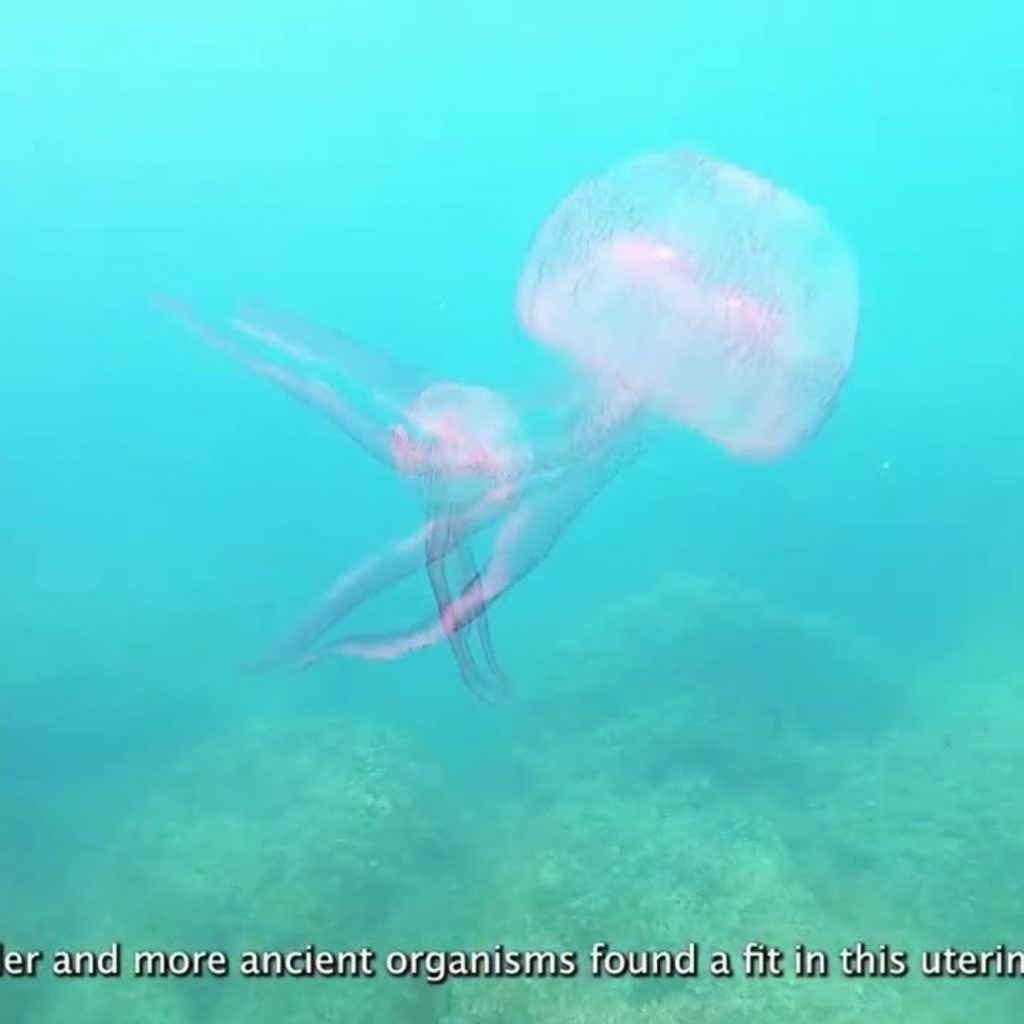
Commissioned by Art4Sea, EU funded platform endorsed by the Decade of Ocean Science for Sustainable Development, Pelagia is a sanctuary dedicated to Mediterranean biodiversity. The video essay intertwines magical realism, matriarchal mythologies, geological layering, and marine life. Its structure is circular, opening and closing with the Sleeping Lady, a prehistoric figurine found in Malta, symbol of birth and regeneration, finding a counterpart in the Pelagia noctiluca jellyfish, observed during diving sessions. The work draws from the sedimentary geology of Gozo, its fossil-rich landscapes near the Salt Pans and Cathedral Cave. It also pays homage to the polylobed structure of Gozo’s Neolithic temples and the sacred figurines found nearby, evoking circularity, duality, and the spiral of time. Through a Maltese poetic voice-over, archival echoes, and layered underwater imagery, Pelagia conjures an ancestral yet contemporary Mediterranean, a place where life, death, and memory flow in perpetual motion. Inspired by Ocean Principles 2, 5, and 6, the work transforms scientific knowledge into a poetic experience, where myth and matter, sea and self, are intimately interconnected.
Dimensions:
+ Artistic works (visual arts, digital art, sound, performance, installations, storytelling, artistic research)
Small Corners of Africa
By Darwin Wanjiru
An artist in film and theatre with works that educate and entertain. I aim to shape and teach on social, economic, and sustainable values and spiritual well-being. My plays and films are on crime, business, family, and love.
Summary of the work:
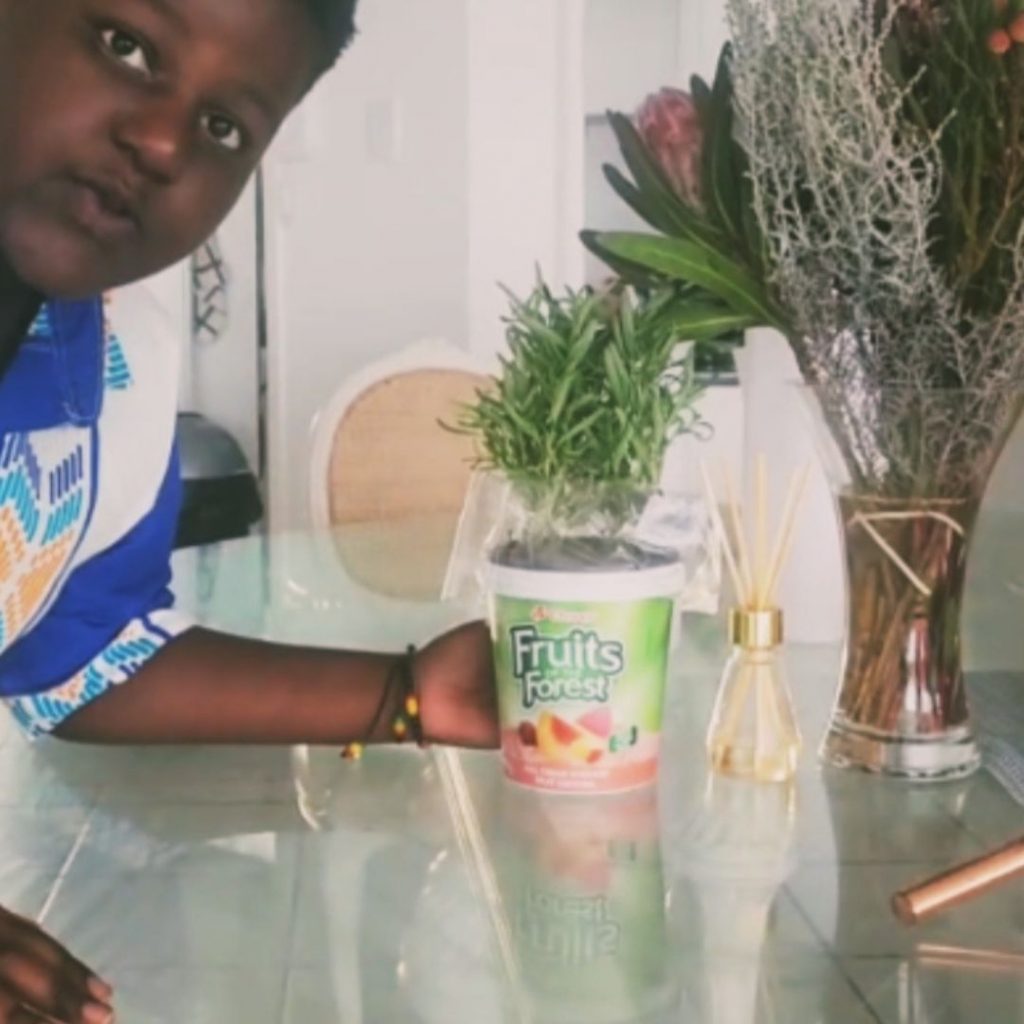
With a population of about 8 billion people, it is very hard to identify that one person and define the impact they have on the entire ecosystem. Randomly selected individuals from an application that will be sent out, will be questioned about how they reuse and recycle the products they purchase, or if at all they do. We will visit them to explore how they are creating sustainable ways to reuse and recycle items.
We introduce normal things the characters do on a day-to-day and showcase the impact it has to the environment by scaling it up using the finite analysis method. We showcase what the characters do to ensure the audience is relating to the impact they have on the environment and how big of a role they have in the agenda of Vision 2030. We will dwell on both the good and the bad and we highlight the impact we could all have if we chose the the good.
Dimensions:
+ Artistic works (visual arts, digital art, sound, performance, installations, storytelling, artistic research)
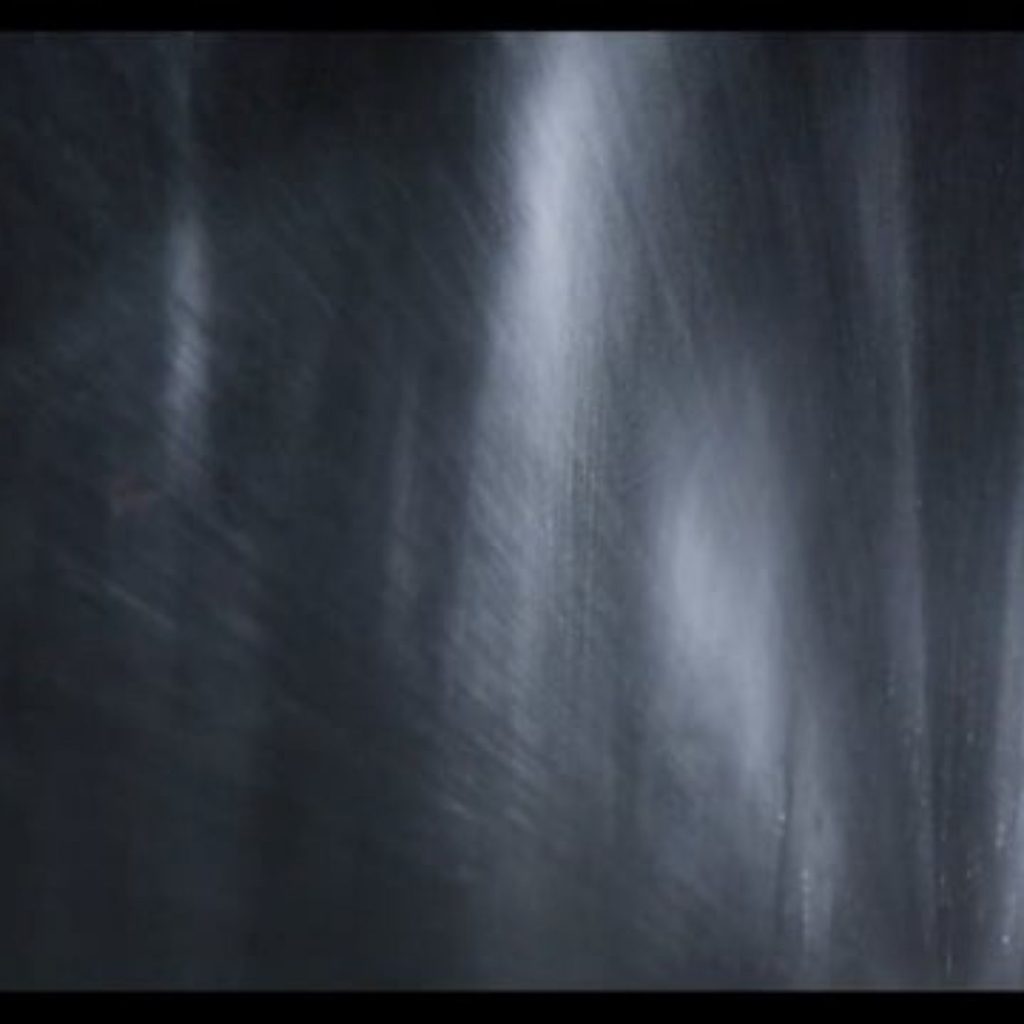
Lullaby for Floods
By Letizia Artioli
Letizia Artioli, artist and PhD investigating the invisible relationships between humans and water ecologies. Exploring sounds and data as po(i)etic attuners for sensing liminal ecosystems.Founder of VCCP Venice Climate Change Pavilion.
Summary of the work:
Lullaby for Floods is a performative installation that transforms floods and weather data into a soundscape and an immersive physical environment. It turns the human bodies of the visitors into a form of turbulence, echoing the dynamics that occur during a flood event and throughout its life cycle.
The installation combines live weather data, satellite data, and field recordings to tell the story of disruptive flood events, post-flood flows, and ongoing water currents. It challenges the way we, as humans and citizens, perceive water bodies formed by storms and rain as they become rivers that reshape and reclaim the landscape. The lullaby composition challenges and questions how we experience complexity and disruption in a post-anthropocenic perspective.
The installation premiered at Mediamatic Amsterdam in September 2025 as part of the Aquatope Program.
Dimensions:
+ Digital tools, visualisations, or narratives exploring water systems and futures
+ Artistic works (visual arts, digital art, sound, performance, installations, storytelling, artistic research)
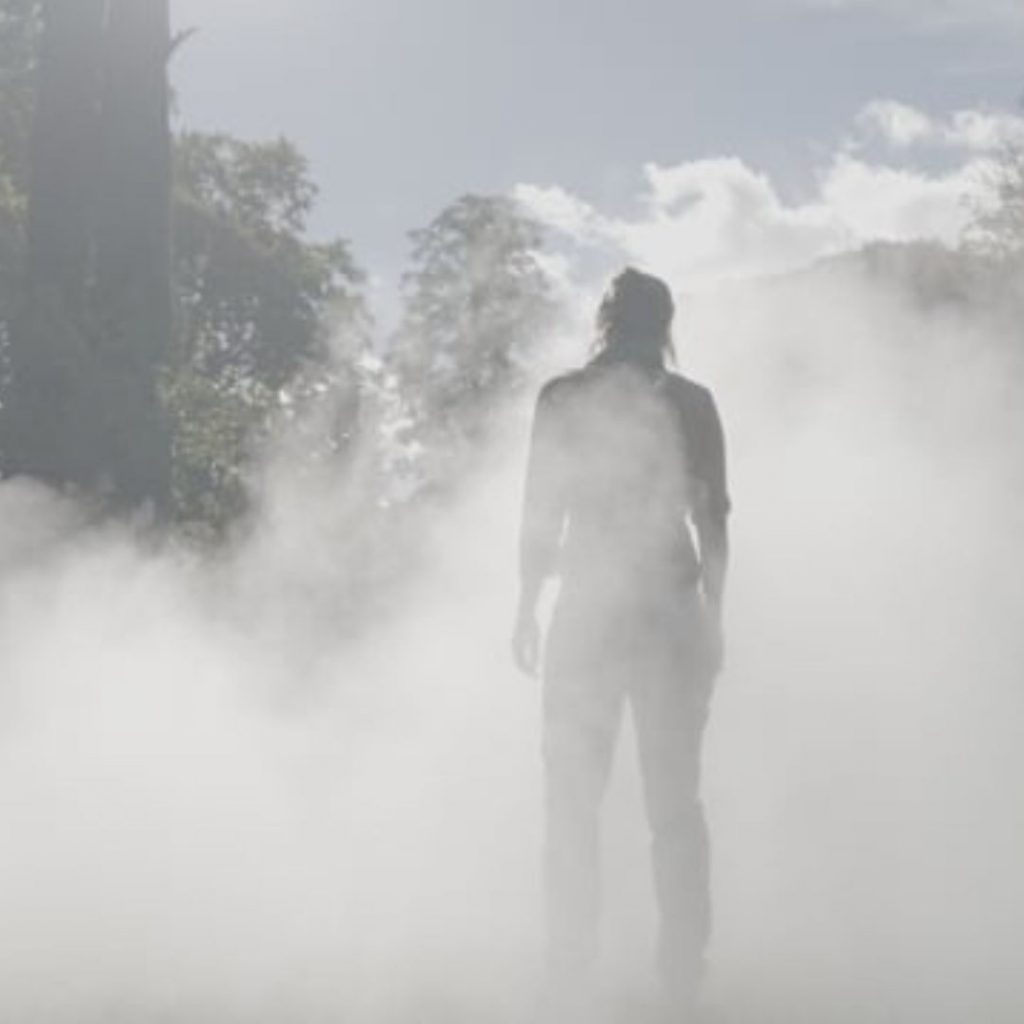
Ombres Blanches (White Shadows)
By Béatrice Lartigue x Nicolas Guichard – Lab212 Collective
Lab212 is an interdisciplinary art collective, founded in 2008 in Paris.
“Our work explores the materialisation of invisible physical events, by immersing visitors in a space whose rules are partly written and partly in the making.”
Summary of the work:
How to give materiality to our wireless networks data in the public space?
electromagnetic-waves #data #landscap
Ombres Blanches embodies in real time the interactions with the surrounding networks, in a climatic phenomenon.
Ombres Blanches intentionally blurs the boundaries between reality and fiction through an exploration of the invisible physical phenomenon of radio frequency waves. The invisible signals emitted by mobile phones, printers and all sorts of smart devices leave an imprint when they connect and exchange data on wireless networks. The data flows transmitted in a space appear as visual traces from an invisible dimension that gradually form and dissolve. Ombres Blanches reveals the invisible spectrum of electromagnetic waves that surround us. The installation embodies in real time the interactions with the surrounding networks, in a climatic phenomenon. Ombres Blanches projects a singular view of the landscape, through a collective, ephemeral and multi-sensory ritual.
Dimensions:
+ Artistic works (visual arts, digital art, sound, performance, installations, storytelling, artistic research)
+ Digital tools, visualisations, or narratives exploring water systems and futures
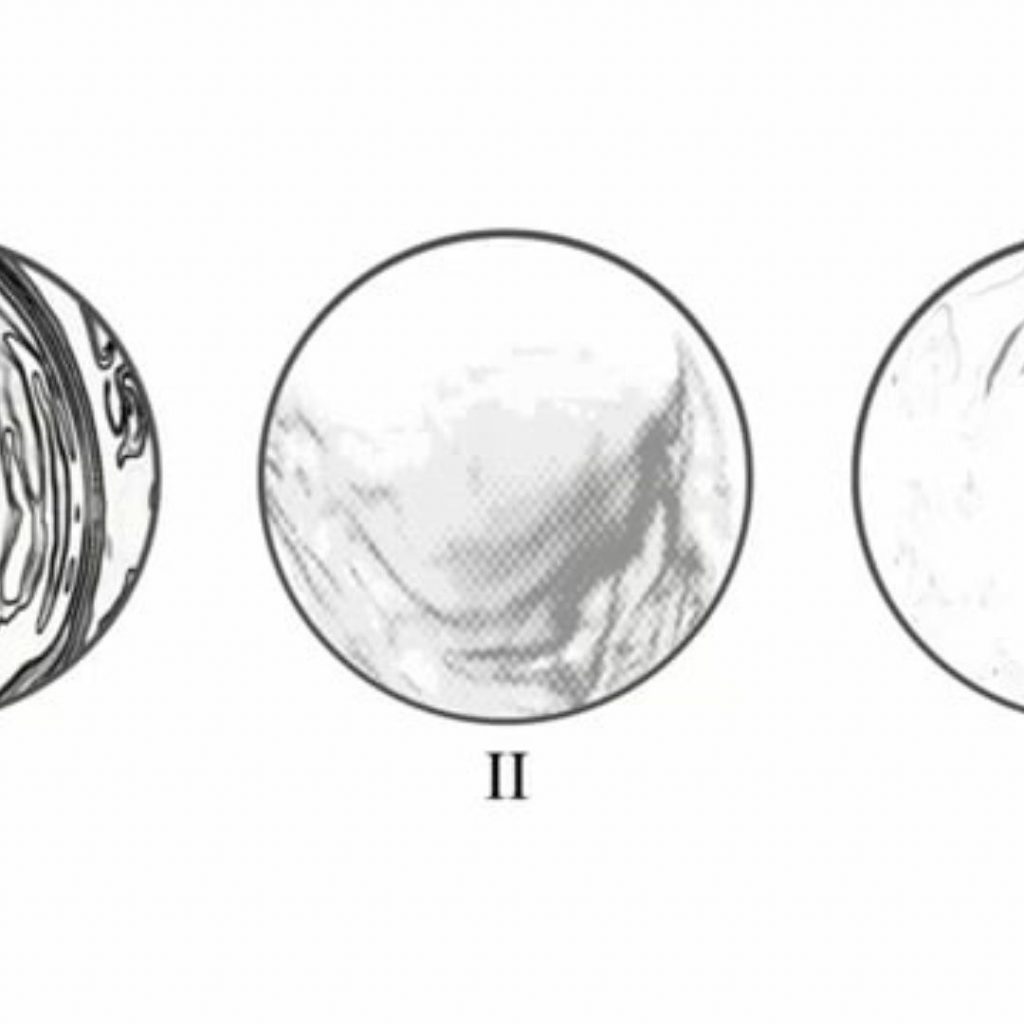
Transition
By Diaa Ahmed Mohamed Ahmedien
Diaa is a new media artist, educator, researcher, and creator of sophisticated interactive systems that investigate convergence technologies as a nexus for concurrent and overlapping computational, physical, and biological systems in our real lives.
Summary of the work:
The experimental drawing by the distributed ink recontextualizes the materiality of the pollutant to raise questions regarding the duality of water’s vital role in healthy life and its serious role in sickness and death.
Dimensions:
+ Artistic works (visual arts, digital art, sound, performance, installations, storytelling, artistic research)
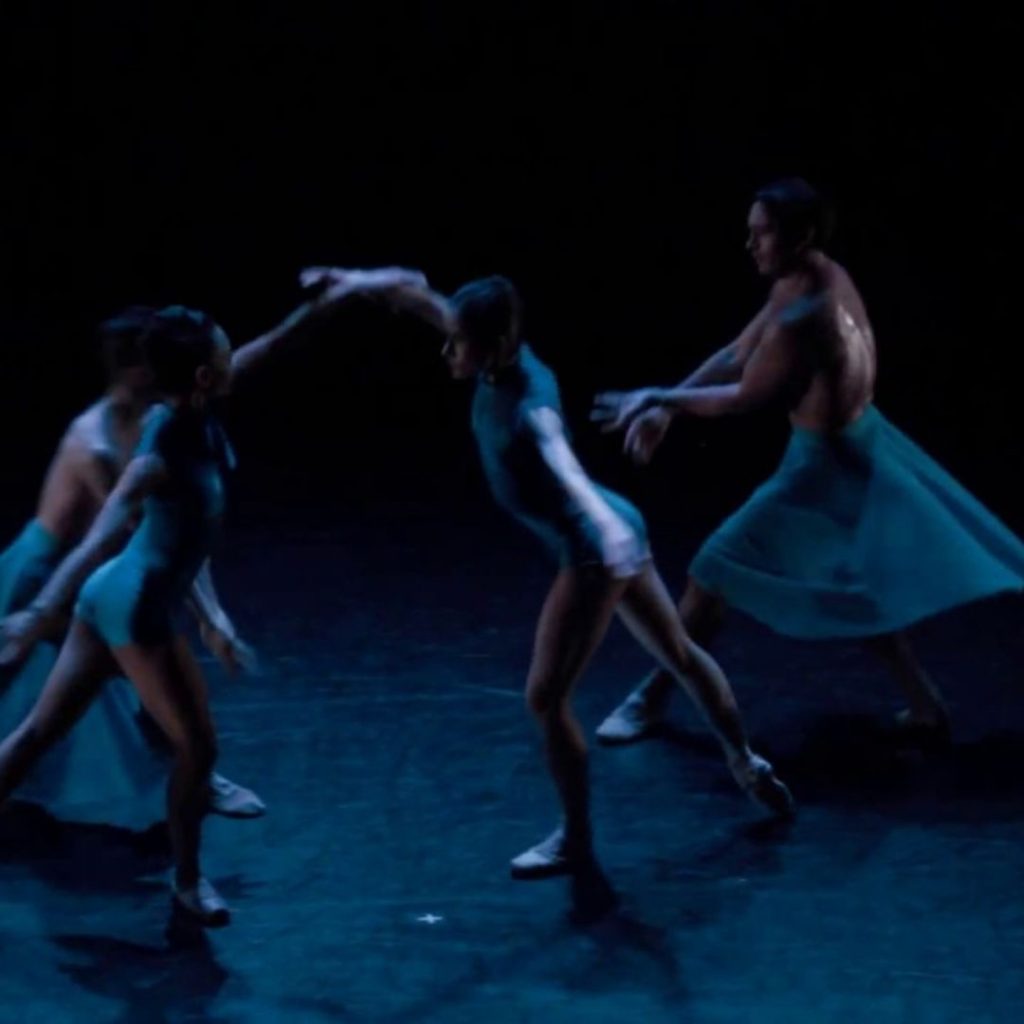
Reflections
By Mike von der Nahmer in collaboration with Fadi J. Khoury / FJK Dance
Mike von der Nahmer is a composer and transdisciplinary artist. In collaboration with choreographer Fadi J. Khoury and FJK Dance, he created Reflections, a water-inspired performance work combining music, projection, and contemporary dance.
Summary of the work:
Reflections is a collaborative work by Mike von der Nahmer and Fadi J. Khoury / FJK Dance, combining choreography, projection design, and music. The piece explores the reflection of light in different forms on water currents, capturing movement through one of life’s most basic elements. Through sound, image, and embodied performance, it translates fluidity, stillness, and wave-like transformation into a sensory artistic experience. First created in New York in 2016, Reflections remains part of the company’s repertoire.
Dimensions:
+ Artistic works (visual arts, digital art, sound, performance, installations, storytelling, artistic research);
+ Cultural, historical, or speculative approaches to water and society
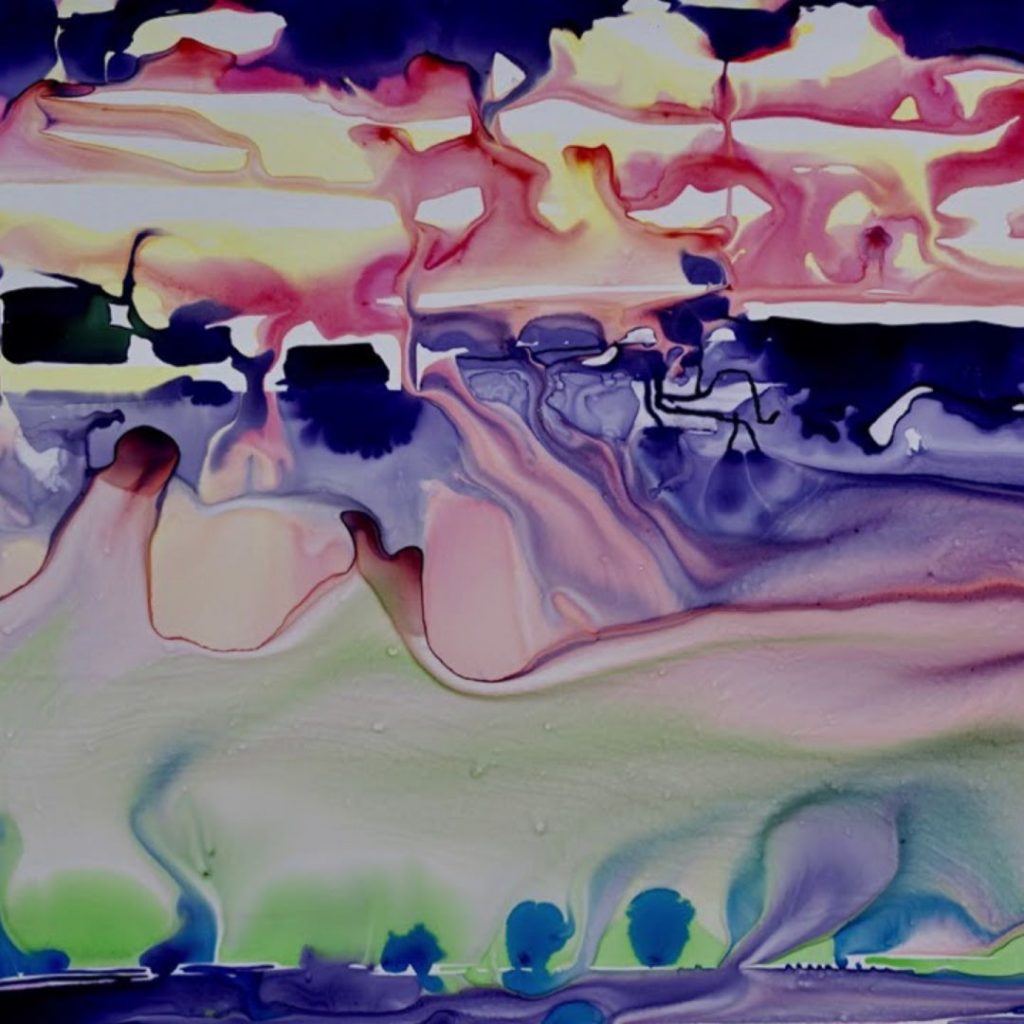
Darkness of Water
By Mike von der Nahmer
Mike von der Nahmer is a composer, transdisciplinary artist, and practice-based researcher working across sound, performance, sonification, and interdisciplinary art. His work connects music, systems, perception, and ecological imagination.
Summary of the work:
Darkness of Water is a two-movement music and dance work by Mike von der Nahmer exploring water as atmosphere, motion, fragility, and force. Composed in 2002 for violin, viola, two celli, piano, and tape, the work consists of Darkness of Water and Lonely Water. Written as a ballet for a Japanese modern dance company in Tokyo, it approaches water not as illustration, but as a sensory and structural principle. Through shifting textures, repetition, intensity, and dissolution, the piece translates fluidity and isolation into sound.
Dimensions:
+ Artistic works (visual arts, digital art, sound, performance, installations, storytelling, artistic research);
+ Cultural, historical, or speculative approaches to water and society
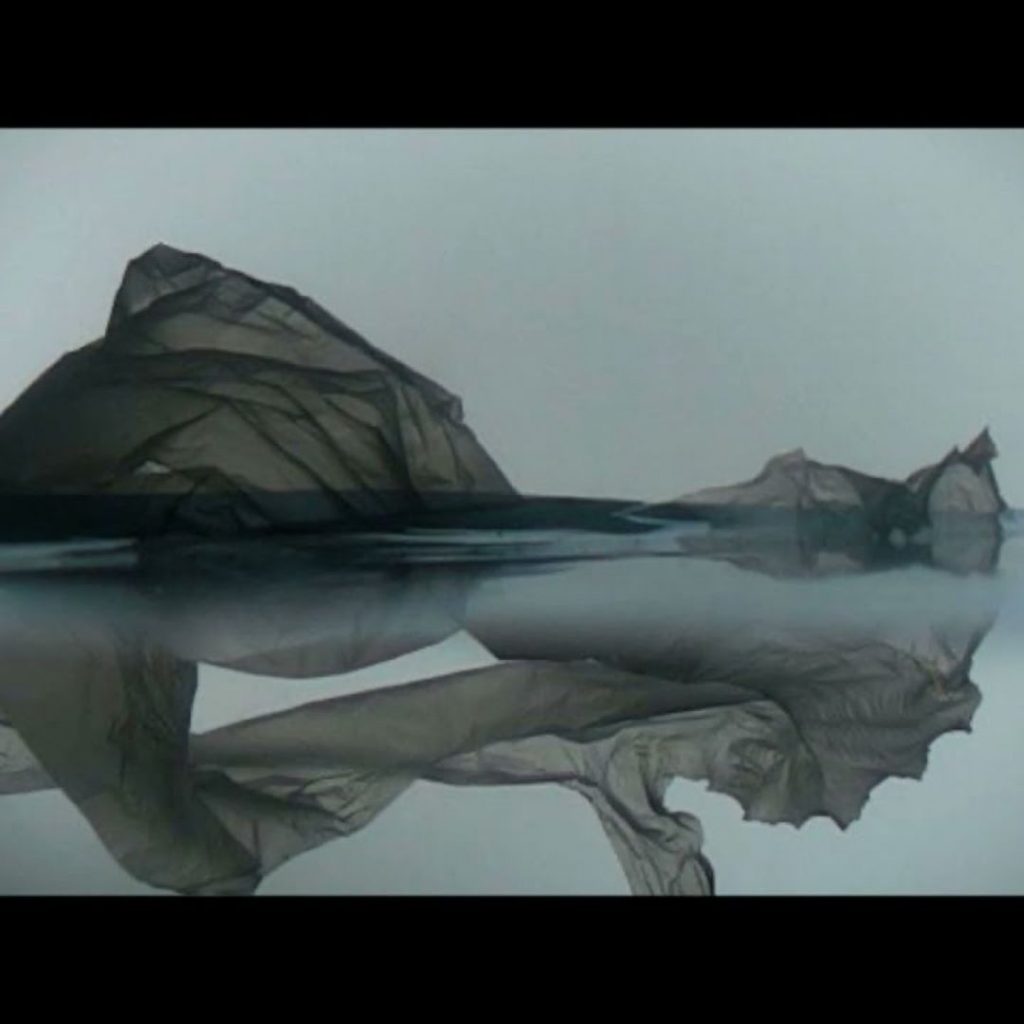
Things are different now
By Asia Ward, Joe Grigar, and Mike von der Nahmer
Asia Ward is an interdisciplinary artist working across climate, sculpture, and science communication. Joe Grigar is a filmmaker. Mike von der Nahmer is a composer and transdisciplinary artist. Together they created Things Are Different Now.
Summary of the work:
Things Are Different Now is a short film by Asia Ward and Joe Grigar with music by Mike von der Nahmer. The work explores climate change, ecological transformation, and the fragile interdependence of human and non-human systems. Through microscopic imagery, wave-like motion, coral–plastic relations, and an original score shaped around drift, tension, and renewal, the film reflects on environmental adaptation and uncertain ecological futures. It approaches water not simply as setting, but as a medium of change, instability, and life.
Dimensions:
+ Artistic works (visual arts, digital art, sound, performance, installations, storytelling, artistic research);
+ Cultural, historical, or speculative approaches to water and society
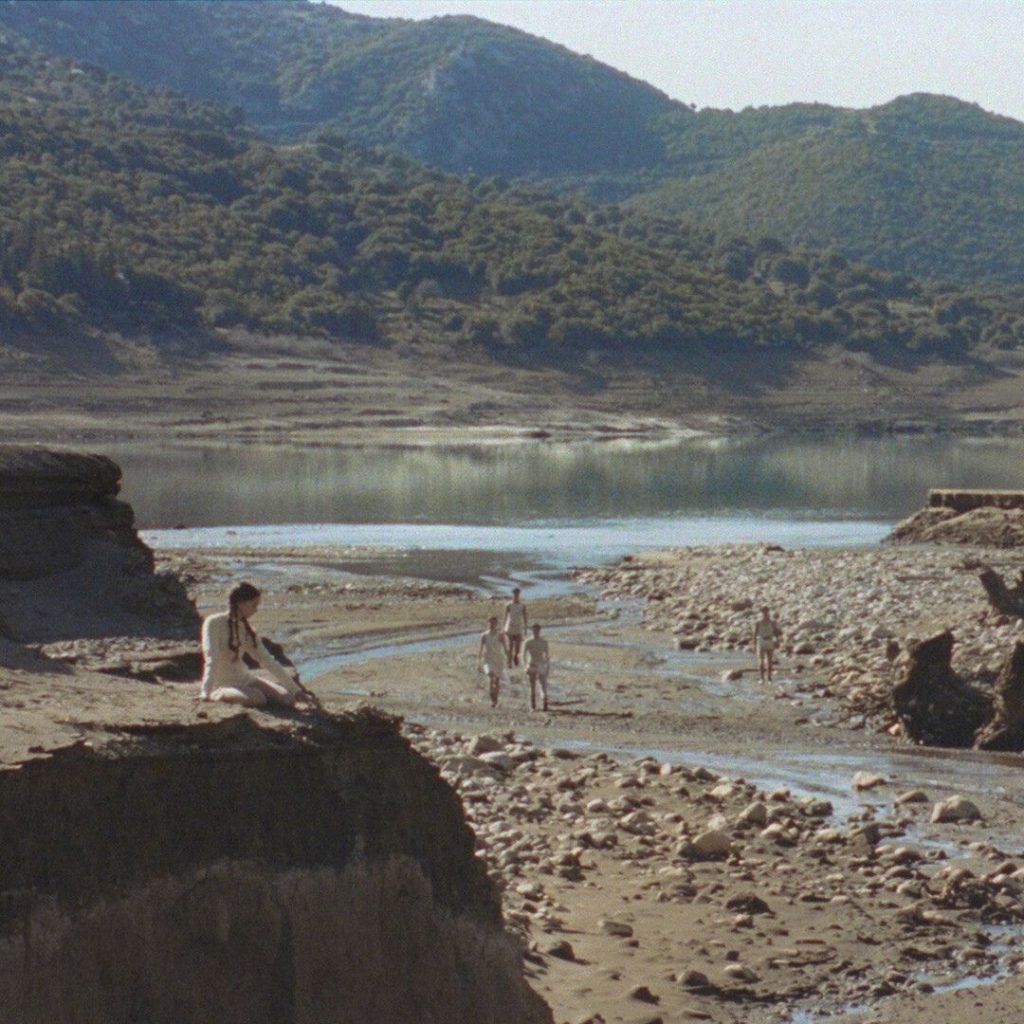
Tectonic Riders
By Efi Gousi
Efi Gousi is a Director and Visual Artist working across film, live performance, and photography. She is a graduate of the Drama School of the National Theatre of Northern Greece (2008) and an Onassis AiR Fellow (2025–26).
Summary of the work:
Tectonic Riders is a short film and performance work filmed at the artificial lake of Mornos in Central Greece, an area that once held the village of Kallio, submerged in the late 1970s to supply water to Athens. Today, due to climate change and a significant drop in water levels, the submerged remains of the village are re-emerging.
The work unfolds as a ritual act set in a transformed, post-natural landscape. It explores climate change not only as environmental collapse, but as a rupture in the relationship between land, body, and memory. Through a techno-shamanic ceremony of rebirth, a group of young female performers activate a choreographic language inspired by the ancient Minoan bull-leaping ritual.
In this reimagined practice, movement becomes invocation. The performers address the Earth as a living presence, articulating a collective desire for reconnection in a world where traditional mythologies have collapsed. Within this landscape, the female body becomes both myth and agent carrying endurance, transformation, and continuity across generations.
Dimensions:
+ Artistic works (visual arts, digital art, sound, performance, installations, storytelling, artistic research);
+ Cultural, historical, or speculative approaches to water and society
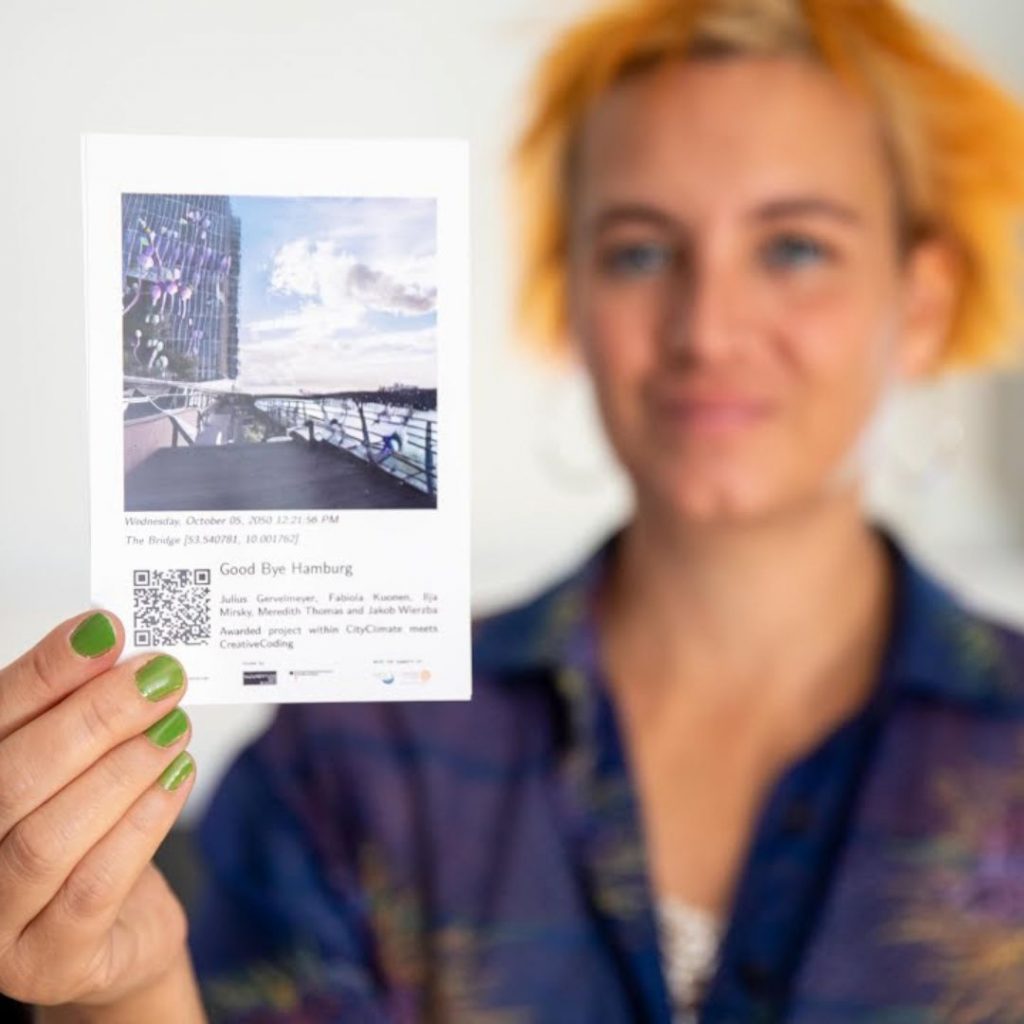
Good Bye Hamburg
By Ilja Mirsky / Fabiola Kuonen / Meredith Thomas / Jakob Wierzba / Julius Gervelmeyer
A cross-disciplinary team uniting arts and technology: Ilja Mirsky (digital dramaturg), Fabiola Kuonen (director), Meredith Thomas (creative technologist), Jakob Wierzba (design & code), and Julius Gervelmeyer (technical concept).
Summary of the work:
GOOD BYE HAMBURG is an interdisciplinary, data-driven performance exploring speculative climate futures for Hamburg’s HafenCity. Developed within “City Climate meets CreativeCoding” at the City Science Lab, HafenCity University Hamburg, it combines scientific modeling and theatrical storytelling to confront audiences with scenarios shaped by rising sea levels and urban change.
Blending real climate data, simulations, and fiction, the project creates an immersive experience between prediction and imagination. It grounds climate change in a familiar urban setting, making its impacts tangible and immediate through performance, digital visualization, and interactive design.
A guided photo walk through HafenCity invites participants to imagine altered futures; back in the lab, their images return transformed by an AI model, presented as printouts and in a final installation, exposing both the allure and the limits of generated visions.
Dimensions:
+ Artistic works (visual arts, digital art, sound, performance, installations, storytelling, artistic research);
+ Digital tools, visualisations, or narratives exploring water systems and futures
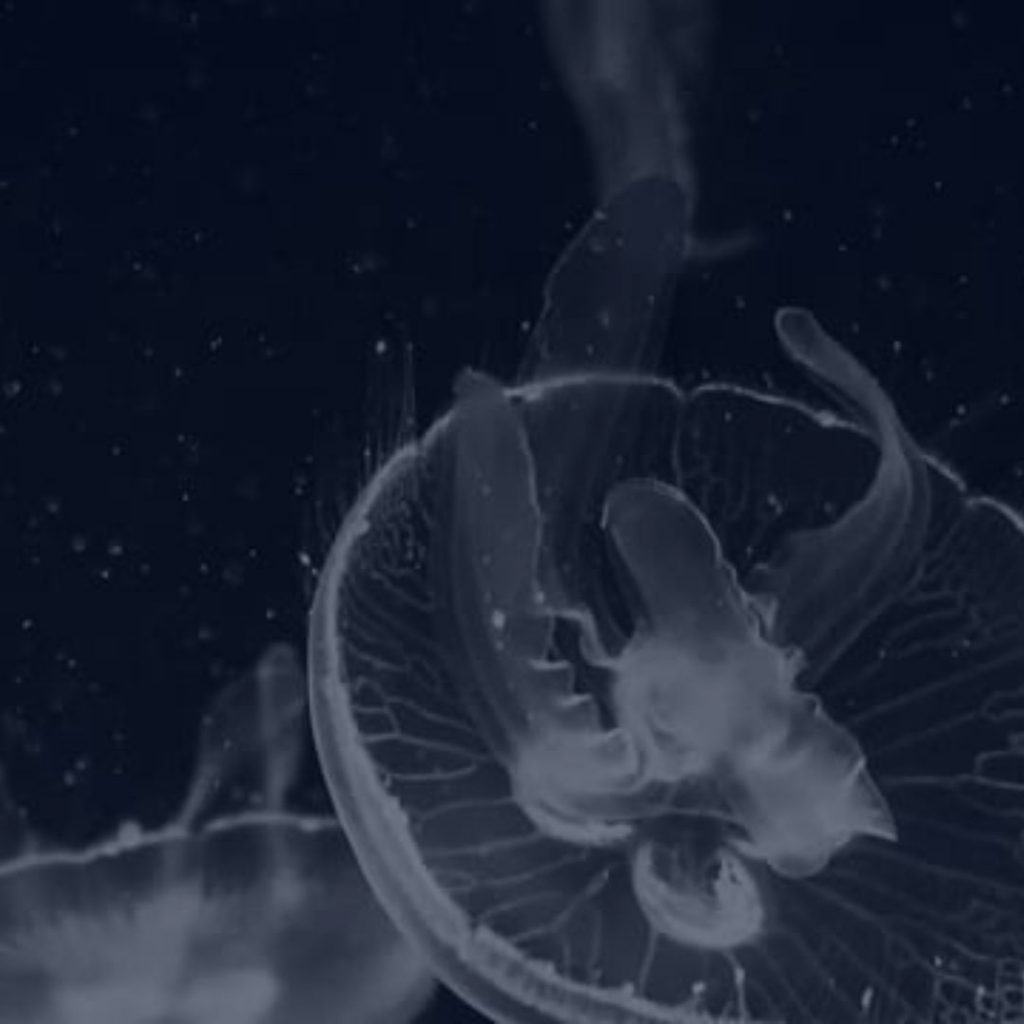
Deep Blue
By Sebastian Wiedemann
Sebastian Wiedemann is a Colombian filmmaker-researcher and philosopher-practitioner of cinematic modes of experience.
Summary of the work:
Springs and Apneas between Worlds to resist and re-exist the pandemic. The power of the womb of the world. Faced with thousands of bodies that cannot breathe and die from Covid-19, this work reflects on the force of apnea as a way to access primal states of life. If Covid-19 is a consequence of anthropic actions, this work is proposed to be a gesture of resistance by appealing to a connection with the cosmos and the sources of life.
“Other worlds, underworlds, and undersea states are evoked in Sebastian Wiedemann’s Deep Blue, made during lockdown in Colombia in 2020. Wiedemann sees the pandemic as a Gaian provocation to look within, to the involutions or folds of matter that unite us all, from microbes to stars, from Homo sapiens to Medusozoa (jellyfish). Wiedemann calls for cinematic immersion, to make the “invisible visible”.(20) Pandemic suffocation and apnea-like pauses promise a future in which we come together to breathe-with, or conspire with, the planet, including our undersea kin, our oldest ancestors.” Tessa Laird (April 2022).
Dimensions:
+ Artistic works (visual arts, digital art, sound, performance, installations, storytelling, artistic research)
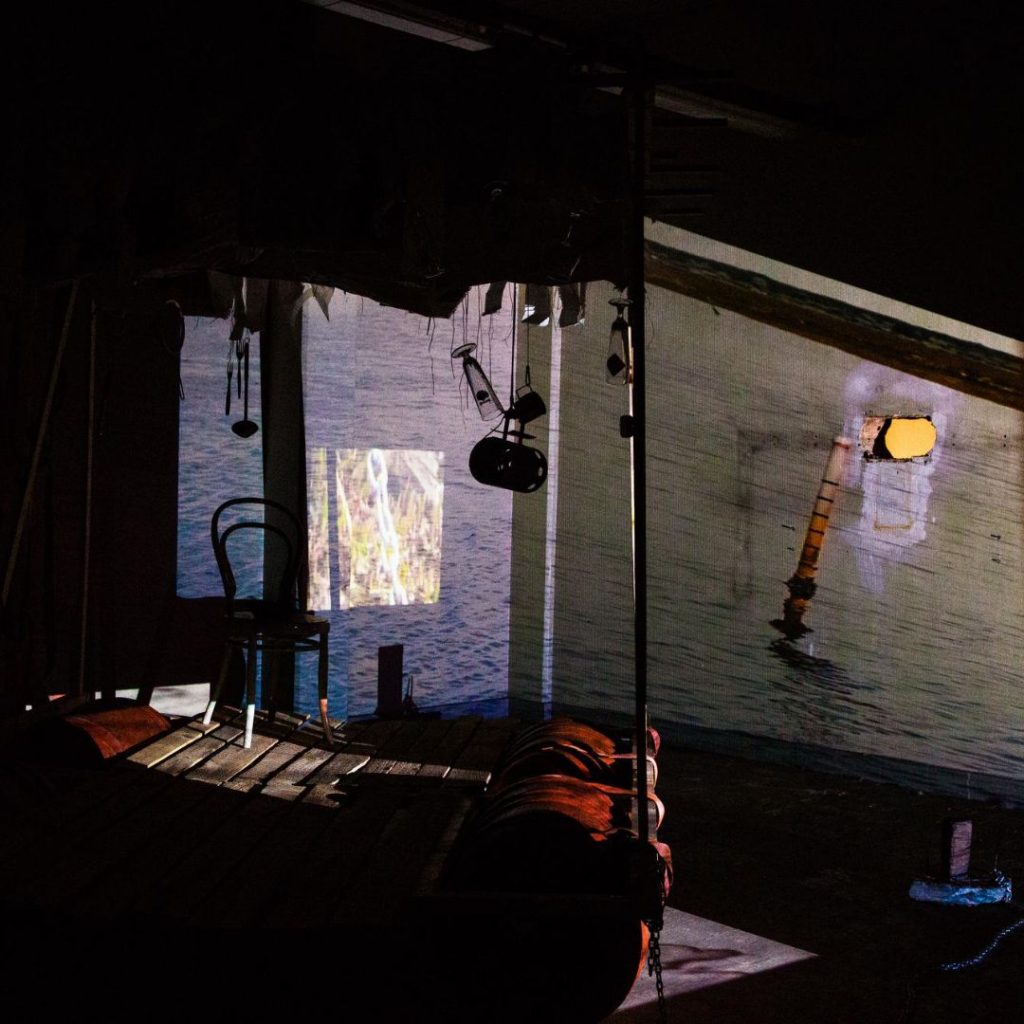
Pialassa-Fragments from the wetlands
By Matilde Stolfa
I investigate the interdependencies between climate change and eco-cultural transformations. Through site-responsive installations, documentary, photography and material research, my practice unfolds the shifting relationship between water and land.
Summary of the work:
The wetlands of Ravenna (IT), existing in a hybrid dimension where the separation between water and land becomes blurry, became a research ground to understand and imagine how to adapt to rising sea levels.Through exploring landscapes, the processes and transformations they underwent, the species inhabiting this place, the stories both from family members and people encountered there, ‘Pialassa-Fragments from the Wetlands’ more widely opened up a reflection on the role and the multi-scalar agency of wetlands in an area increasingly affected by rising sea levels. It fabulated on the possibility of recontextualizing TEK (traditional ecological knowledge) and informal architectural languages to face rising sea levels while simultaneously dignifying a marginalized type of knowledge that favoured adaptation and co-existence with water rather than control over landscape and erasure.
The work, presented as an immersive multimedia installation, aimed to foster a reconnection with the wetlands through a situated approach, highlighting the relational nature of landscapes and exploring water’s evolving role in eco-cultural systems in the age of rising sea levels.
Dimensions:
+ Artistic works (visual arts, digital art, sound, performance, installations, storytelling, artistic research);
+ Cultural, historical, or speculative approaches to water and society
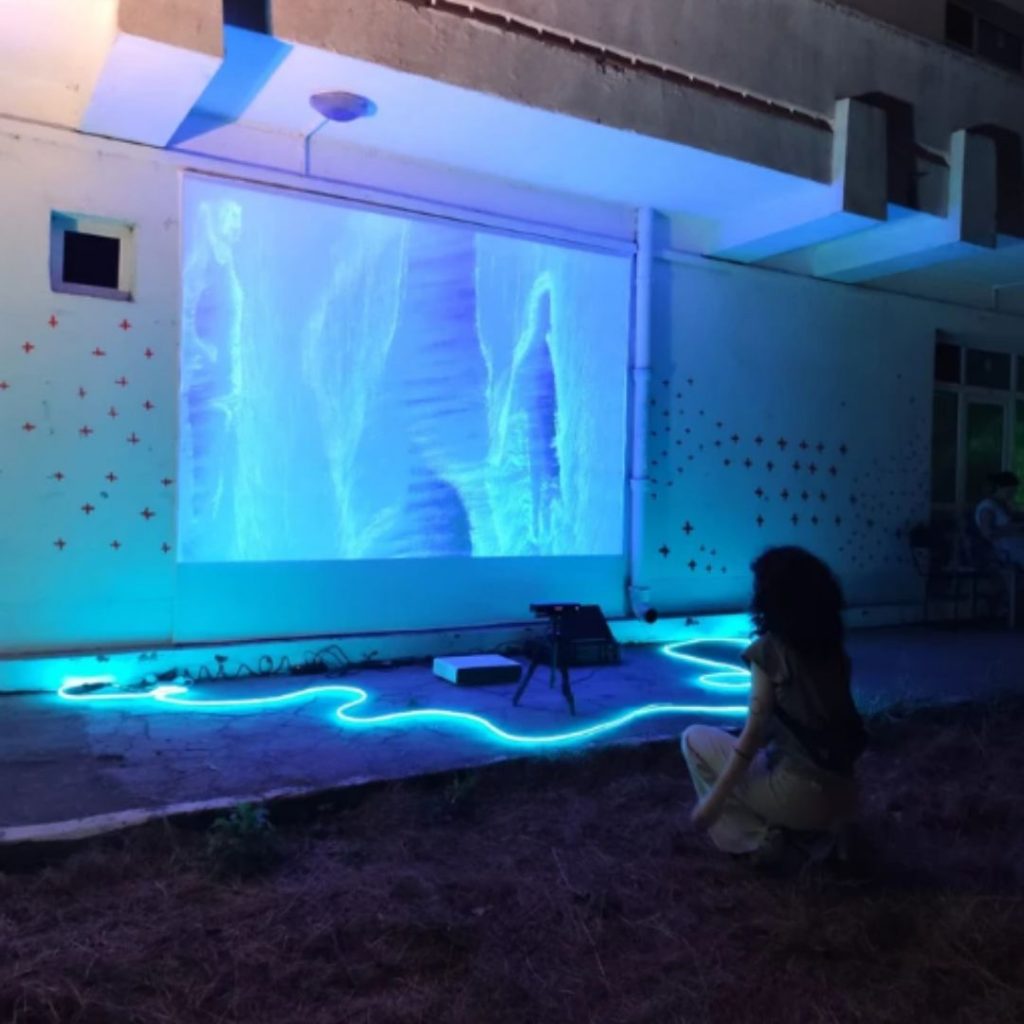
Hydrosphere in motion
By Ethics of Joy
George Urse and Cristina Bodnărescu are creating digital and hybrid worlds since 2020. Their immersive, interactive and VR works connect people, environment and senses, blending art, sound and technology to inspire reflection, play and learning.
Summary of the work:
Hydrosphere in Motion is an interactive audiovisual installation that explores water as a living, dynamic system. Using motion tracking, participants’ movements generate real-time visuals – from fluid simulations, particle flows, and shifting structures inspired by waves, currents, and molecular behaviour – accompanied by original music.
The installation invites the body to embody water: to flow, disperse, gather, and reshape space. This physical engagement translates human gesture into hydrological motion, revealing parallels between bodily movement and water’s continuous transformation.
By immersing participants in these responsive environments, the work creates a sensory space for reflecting on our intrinsic connection to water, its adaptability, its rhythms, and its vital presence within and around us.
Dimensions:
+ Artistic works (visual arts, digital art, sound, performance, installations, storytelling, artistic research)
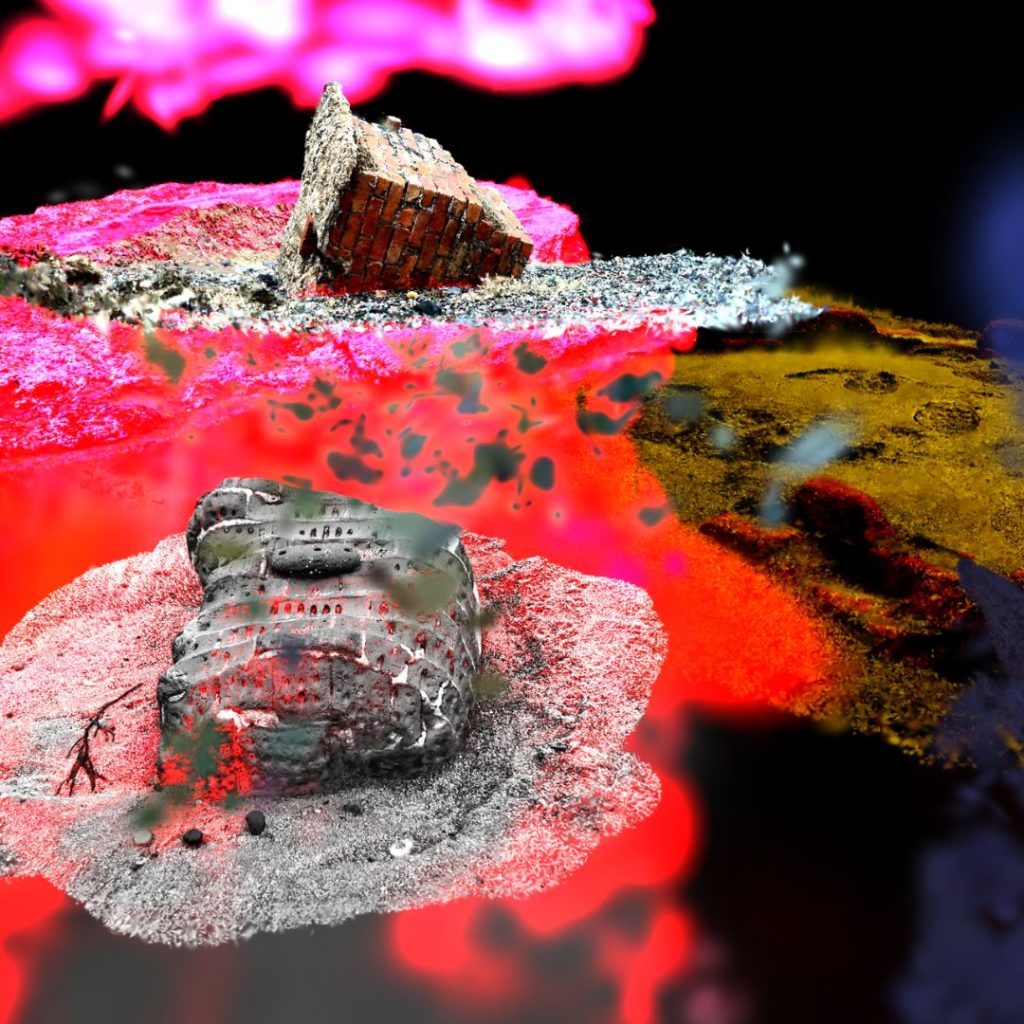
Visible Traces of The North Sea
By Noah Misan Okwudini
Noah Misan Okwudini is an artist and researcher from Warri, Nigeria. His current work explores using XR and AI assisted technologies to create immersive experiences centred around coastal challenges.
Summary of the work:
Visible Traces uses Radiance Field technology to capture sites along the Holderness Coast the fastest eroding shoreline in the UK and Europe, where the North Sea claims an average of two metres of land yearly.
Working directly from the shoreline, the work documents specific places: Withernsea, where Victorian sea defences stand against advancing water; Spurn Point, a fragile sand spit held between the Humber estuary and the open North Sea; and other sites along this coast where land and infrastructure are in active retreat.
Buildings, barriers, and landmarks are recorded as volumetric light captures and rendered in game engines as luminous, fragmenting forms. The visual instability of the Radiance Field process is the work’s language.
Field recordings of the coastline are processed as sonic glitch, fracturing in the same way the landscapes do visually.
Experienced in extended reality and video art, viewers inhabit these dissolving geographies, encountering what water, tide, and erosion take from the communities that live along this shoreline. The work emerges from ongoing practice-based research into immersive technologies for coastal management and communication.
Dimensions:
+ Artistic works (visual arts, digital art, sound, performance, installations, storytelling, artistic research);
+ Digital tools, visualisations, or narratives exploring water systems and futures
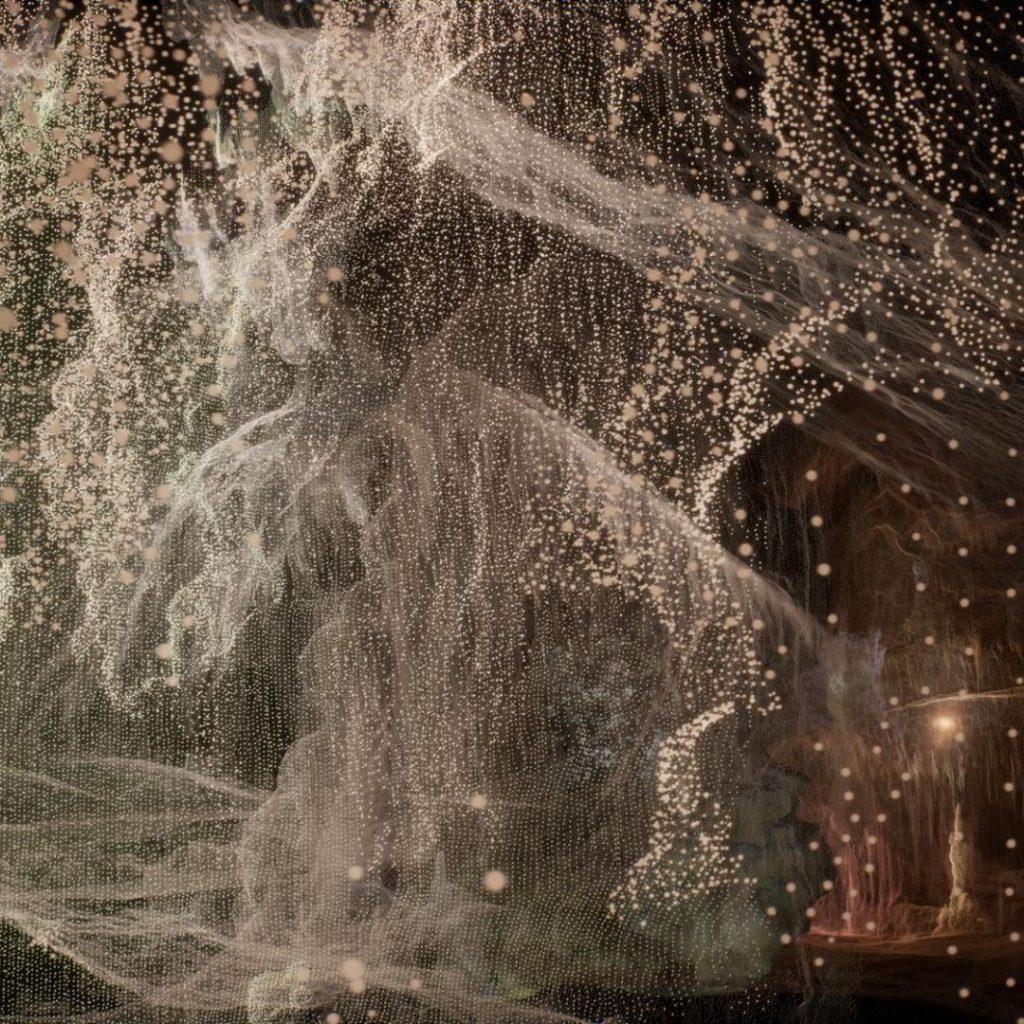
The Stones Only Appear To Be Non-Living
By Swamp_Matter
Swamp_Matter investigates threshold ecologies, where categories dissolve, systems shift, layer, and glitch. Grounded in embodied field research and scientific collaboration, they produce new media installations interwoven with speculative fiction.
Summary of the work:
The Stones Only Appear to Be Non-Living is an exploration of geological time and the material deposition of human impacts in the Earth’s crust. Based on situated and embodied research in the Škocjan Caves, it constructs a speculative, multilayered understanding that reveals time beyond the human scale. Caves, often perceived as stable and eternal, are in constant flux—formed by climate conditions, water and sediments over time. The river, a force of erosion and accumulation, becomes a vessel for an underground heterochronic narrative. Fragmented and hyperlocalized it challenges the notion of permanence, exposing an unstable terrain where deep time and human time collide. This installation invites an attunement to the instability of our own ground and the vast, indifferent depths beneath us, guiding one through the porous landscape, dissolving temporal boundaries.
Dimensions:
+ Artistic works (visual arts, digital art, sound, performance, installations, storytelling, artistic research)
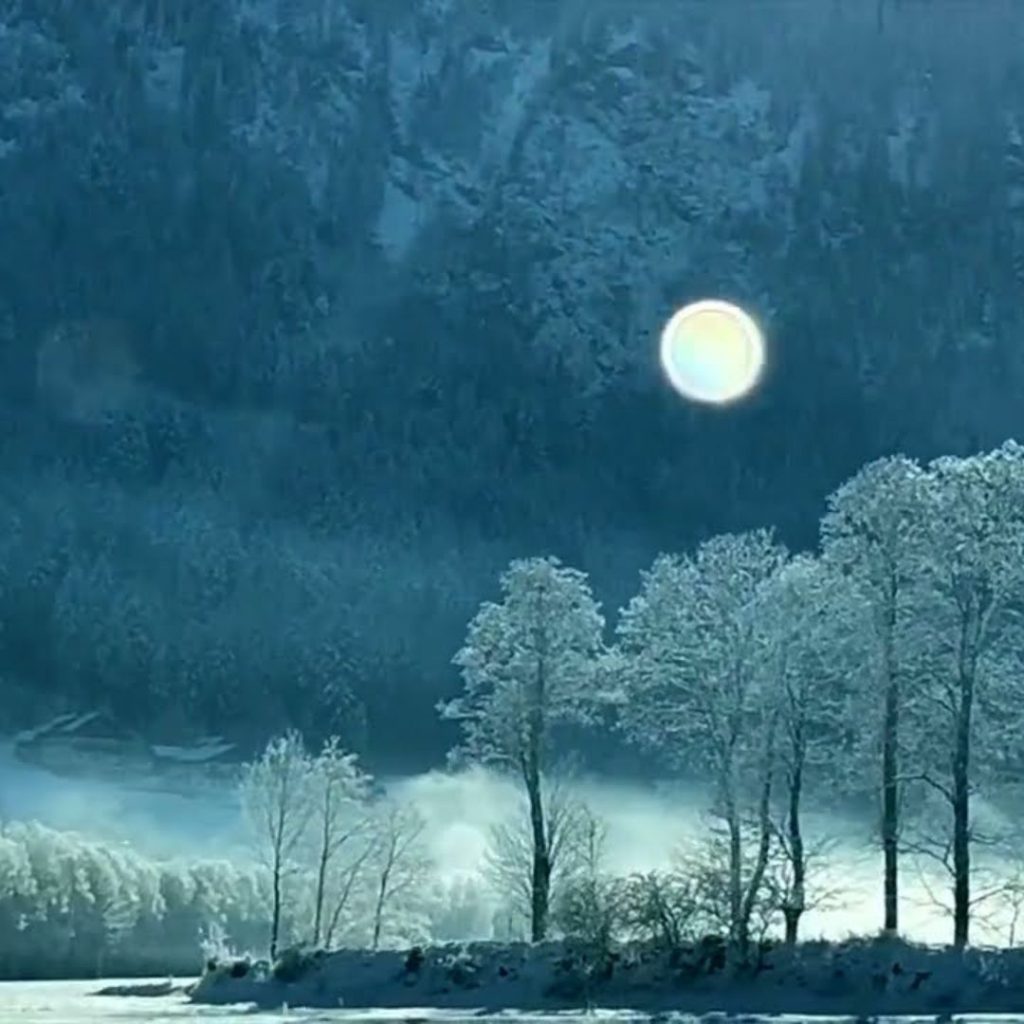
Cyclical sound environment
By Andrew Munn
Andrew Munn is a bass and interdisciplinary artist whose work examines ecology, materiality, history, and power through music, opera, text, sound installation, and research-based artistic practice.
Summary of the work:
The cyclical sound environment is a sound installation structured around water and its phase changes from solid to liquid. Ice melts, droplets form, and water flows, through an installation of metal, wood, glass, and found objects that are sounded with a network of transducers, contact microphones, and hydrophones.
Water also functions as an acoustic medium. Melting ice generates atmospheric sounds, dripping water creates rhythmic activity, and submerged speakers and hydrophones bring listeners into the process of physical change. As water changes state, the acoustic properties of the installation change with it, producing an evolving sonic environment.
Rather than presenting water as a symbol, the CSE uses its physical behavior as a compositional and acoustic protagonist. The installation allows environmental processes to shape musical form, creating a space where sound, material transformation, and long-term ecological change become audible through direct physical interaction.
The work was conceived of as a performance environment in which to deconstruct classical music in live performances merging data on the loss of glacial ice and music about winter.
Dimensions:
+ Artistic works (visual arts, digital art, sound, performance, installations, storytelling, artistic research)
+ Contact
For general S+T+ARTS AQUA MOTION inquiries, contact us at:
Patricia Carvalho, patricia.carvalho@inova.business
Discover more about S+T+ARTS AQUA MOTION



STARTSAQUAMOTION is co-funded by the European Union under the STARTS – Science, Technology and Arts initiative of DG CNECT (GA no. LC-03568055). Views and opinions expressed are those of the author(s) only and do not necessarily reflect those of the European Union or DG CNECT. Neither the European Union nor the granting authority can be held responsible for them.